




【《We Chinese in America》Media Editor Tang Zhao, December20,2022】As an ongoing effort to enhance our valuable service to We Chinese in America website readers, We Chinese in America website posts English and Chinese versions of “IRS News Release” , “IRS Fact Sheets”, and “tax tips” directly received from IRS Media Relations Office in Washington, D.C.. We are pleased to take on this important role partnering with IRS to better inform the public.
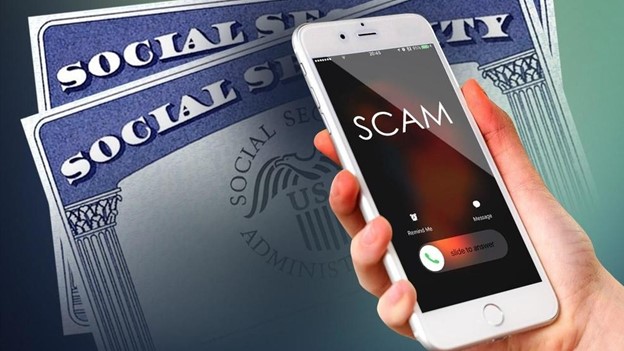
IRS reminder: For many employers and self-employed people, deferred Social Security tax payment due Dec. 31
WASHINGTON — The Internal Revenue Service today reminded employers and self-employed individuals that chose to defer paying part of their 2020 Social Security tax liability that their second annual installment of the deferred amount is due on Dec. 31, 2022.
As part of the COVID relief provided during 2020, employers could choose to put off paying the employer’s share of their Social Security tax liability, which is 6.2% of wages. Self-employed individuals could also choose to defer a similar amount of their self-employment tax. Generally, half of that deferral was due on Dec. 31, 2021. The other half is due on Dec. 31, 2022.
Earlier this fall, the IRS sent reminder notices to affected employers and self-employed individuals. The agency noted, however, that those affected are still required to make the payment on time, even if they did not receive a notice.
How to repay the deferred taxes
Employers and individuals have several options for making this payment. Deferral payments can made through the Electronic Federal Tax Payment System (EFTPS), Direct Pay, by debit card, credit card or digital wallet, or with a check or money order. No matter which payment option is chosen, it must be made separately from other tax payments and deposits. This will ensure that it is credited properly and will help avoid follow-up bills or notices.
EFTPS
Employers and individuals can make the deferral payments through enrollment in the Electronic Federal Tax Payment System, a free service available from the Treasury Department. On the Tax Type Selection screen, choose Deferred Social Security Tax and then change the date to the applicable tax period (the calendar quarter in 2020 for which tax was deferred). Visit EFTPS.gov, or call 800-555-4477 or 800-733-4829 for details.
Direct Pay
Alternatively, self-employed individual taxpayers can choose Direct Pay to pay directly from a checking or savings account. This service is available free only on IRS.gov/payments/direct-pay. Select the "Balance Due” reason for payment and apply the payment to the 2020 tax year where the payment was deferred. Direct Pay is not available to pay employment taxes.
Debit card, credit card or digital wallet
If paying with a credit card, debit card or digital wallet, select "installment agreement." Apply the payment to the 2020 tax year where the payment was deferred. Note that the IRS does not charge a fee for this service, but the authorized third-party payment processors do. Visit IRS.gov/Payments for details.
Check or money order
Make any check or money order payable to United States Treasury, not IRS. For more information on where to mail payments see Instructions for Form 941.
Internal Resource Service
Media Relation Office
Washington, D. C
Media Contact: 202 317 4000
Public Contact: 800 829 1040
|
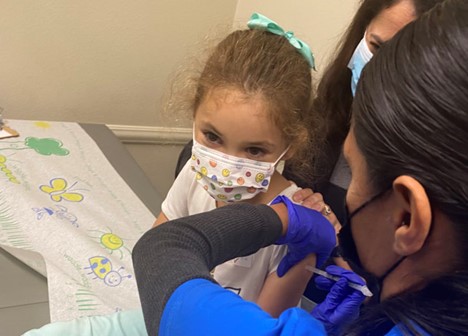
【《We Chinese in America》Media Editor Tang Zhao, December 17, 2022】Per Bivalent COVID-19 vaccination boosters are now approved and available in San Diego County for children as young as six months of age. The County Health and Human Services Agency is urging parents to protect their children, and themselves, by getting vaccinated with the new booster.(Photo credit: County of San Diego Communications Office)
The Federal Drug Administration (FDA) has expanded the emergency use of the updated Pfizer and Moderna bivalent booster vaccines for children as young as six months. The FDA previously expanded availability to include 5- to 11-year-olds in October. The Centers for Disease Control and Prevention and California Department of Public Health quickly recommended vaccinations for young children after the FDA approval.
“We can now provide additional protection for children as young as six months of age from COVID-19,” said County Public Health Officer Wilma J. Wooten, M.D., M.P.H. “This is especially important with the high incidence of COVID-19 in our community. Please take advantage and have your children vaccinated to protect them and the rest of your family.”
County residents continue to deal with a triple threat of respiratory diseases this winter season, from COVID-19 to the flu to respiratory syncytial virus (RSV). Public Health officials still strongly urge people to get vaccinated for both COVID-19 and the flu.
The bivalent COVID-19 booster and flu vaccinations are separate shots, but they can be given at the same visit. They effectively decrease the chances of getting infected, being hospitalized, or dying from the separate viruses that each vaccine targets. Boosters are available through healthcare providers and at participating pharmacies. Parents can visit the state’s My Turn website to schedule an appointment.
County of San Diego Health and Human Services Agency began offering boosters for children as early as six months age today. Booster dose availability is listed on the County’s COVID-19 vaccinations schedule webpage.
The updated boosters were designed to protect individuals from the worst outcomes of COVID-19, including hospitalization and death. Everyone six months of age and older who has had their primary vaccination series is eligible to get the updated booster two months following any COVID vaccine or booster dose.
County officials also recommend wearing a mask if you are able, particularly during indoor public gatherings, to protect yourself and those around you.
In addition to vaccination and masking, San Diegans can take a number of other precautions to protect themselves against COVID-19, as well as seasonal illnesses like the flu. These measures include:
- Cleaning hands thoroughly and often;
- Staying away from sick people;
- Staying home and avoiding contact with others when sick;
- Home testing when exposed or when ill; Regularly cleaning commonly touched surfaces.
Federal Government Makes Free At-home Tests Available Again:
The White House has moved to make free at-home COVID-19 tests available again through the winter for a limited time. Households can order one pack of four free tests through the U.S. Postal Service. For more information about testing, go to the County of San Diego COVID-19 testing webpage.
COVID-19 Vaccination Progress:
- Close to 2.69 million or 80.4% of San Diegans received the primary series of one of the approved COVID-19 vaccines.
- Bivalent boosters administered: 474,245 or 19% of 2,494,254 eligible San Diegans.
- More vaccination information can be found at coronavirus-sd.com/vaccine.
COVID-19 Deaths:
- 24 additional deaths were reported since the last report on Dec. 8, 2022. The region’s total is 5,608.
- Of the 24 additional deaths, 14 were women and 10 were men. They died between Jan. 8, 2022, and Dec. 6, 2022. Nine of the newly reported deaths occurred in the past two weeks.
- 12 of the people who died were 80 years or older, four were in their 70s, two were in their 60s, five were in their 50s and one was in their 20s.
- 15 of these people had been vaccinated and nine had not received any COVID-19 vaccines.
- 21 had underlying medical conditions. Three had no underlying medical conditions.
COVID-19 Cases, Case Rates and Testing:
- 4,821 COVID-19 cases were reported to the County in the past seven days (Dec. 6, 2022, to Dec. 12, 2022). The region’s total is now 952,752.
- The 4,821 cases reported in the past week were higher compared to the 5,649 infections identified the previous week (Nov. 29, 2022, to Dec. 5, 2022).
- 6,197 tests were reported to the County on Dec. 10, and the percentage of new positive cases was 10.1% (Data through Dec. 10).
- The 14-day rolling percentage of positive cases, among tests reported through Dec. 10, is 10.1%.
Influenza Activity
The County Health and Human Services Agency now publishes the Respiratory Virus Surveillance Report weekly. The report is published each Thursday and tracks key respiratory illness indicators, including flu cases and deaths.
For the week ending Dec. 10, 2022, the report shows the following:
- Seven additional flu deaths; the season’s total is now 20.
- Four of the additional flu deaths were women and three were men. They died between Dec. 1, 2022, and Dec. 6, 2022.
- Four of them had received a flu shot this season and three had not.
- All had underlying medical conditions. One of the newly reported deaths was coinfected with COVID-19.
- Emergency department visits for influenza-like illness: 7% of all visits (compared with 10% the previous week).
- Lab-confirmed influenza cases for the week: 1,603 (compared to 2,600 the previous week).
- Total lab-confirmed cases to date: 17,182 (compared to 696 at the same time last season and an 815 prior 5-year average during the same week).
(Source: County of San Diego Communications Office)
This website has a free subscription function, please enter your email address and name (any nickname) in the upper right corner of the page. After subscribing, you can receive timely updates of the website. I hope that new and old readers will actively subscribe, so that we have the opportunity to provide you with better services
Please click: Home (wechineseus.com) for more news and content on this website
Follow The Chinese Media's Twitter account: https://twitter.com/wechineseinus
Follow The Chinese Media's Facebook account: https://www.facebook.com/wechineseinamerica/
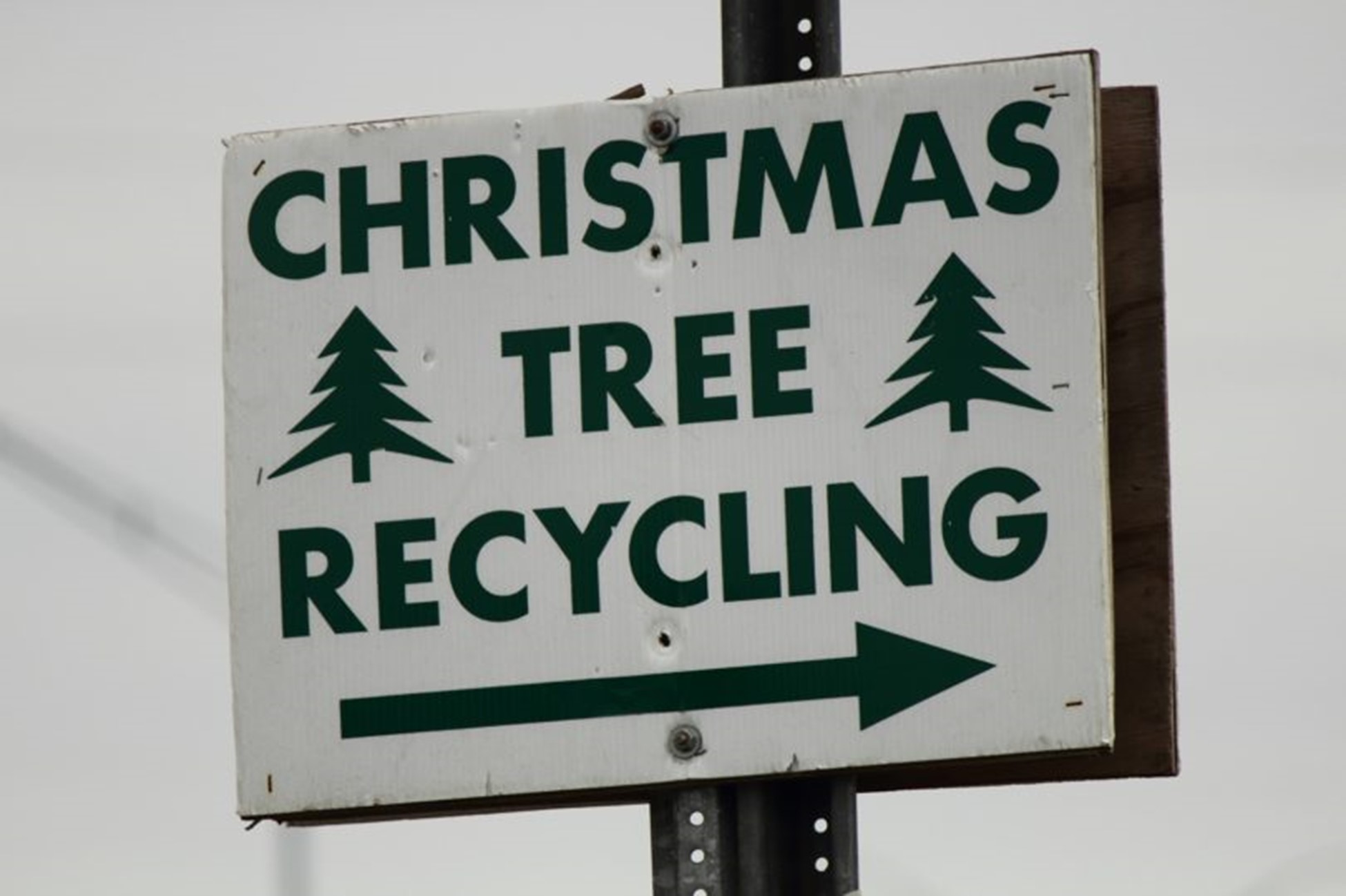
Yes! The holidays are a great time of the year to put your recycling skills to work, from all that wrapping paper to gift boxes and even our Christmas trees—if you are using a real tree.
And, in the holiday spirit of giving, the County Department of Public Works would like to give you some tips on what to recycle and how to do it properly. That way you can even give something back to Mother Earth in this season of giving.
Christmas Trees
We all love our beautiful Christmas trees. But if you’re using a real tree, there eventually comes a time to say goodbye. The County is here to let you know how to recycle it the right way.
Properly recycled trees and wreaths can be turned into mulch that will improve soil health and help soil retain moisture at our parks, farms, home gardens and landscapes. Recycling them also keeps them from going into the trash where they can unnecessarily fill up landfills and generate unwanted climate-changing greenhouse gases as they decompose.
So, check with your waste hauler to find out if they offer curbside pickup. Many of them do. Or go to the County’s recycling and hazardous waste database, WastefreeSD.org, to find Christmas tree drop-off sites near you. It’s easy.
Type “Christmas tree” in the “find an item” box, add your ZIP code, community and how you heard about the site, and you’ll see all the drop-off locations near you.
Finally, remember, never leave your old dry tree or wreaths lying in the backyard where they can become dangerous fire hazards.
Know What Packaging Can — and Can NOT — be Recycled
Online shopping and gift-giving typically means lots of packaging, and a lot of stuff to recycle. But not all packaging can be recycled. For example, cardboard boxes and kraft paper can be recycled (just break them down and put them in your blue recycling bin). But other items can’t — manila envelopes, padded plastic mailers, bubble-wrap and traditional gift-wrapping materials including metallic wrapping paper, wrapping paper with glitter, ribbons, bows, twine, tissue paper and cellophane. So please DO NOT put them in your blue recycling bins; consider re-using them instead. Here’s a link to learn more about how to Recycle Right, during the holidays and every day.
Christmas and Holiday Card Recycling
Like packaging materials, not all holiday cards should be added to your recycling. Simple paper cards and envelopes can be added to your blue bins. But cards that have glitter, foil, metallic inks (inks made with tiny metal flakes) or other adornments can’t. If there’s a glitzy front and plain paper backing, tear the cards in two. Recycle the backs and put the glitzy fronts into the trash.
Holiday Light Recycling
Please — don’t put old holiday lights in your recycling bins. They can tangle up recycling equipment and they also pose a danger to workers in those recycling centers. For recycling options, please visit WasteFreeSD.org, or contact a scrap metal or e-waste recycler.
So there you have it. Remember, if you have other questions about what can and can’t be recycled, go to DPW Recycling’s webpage or to DPW Recycling’s Facebook page.
(Source: County of San Diego Communications Office)
This website has a free subscription function, please enter your email address and name (any nickname) in the upper right corner of the page. After subscribing, you can receive timely updates of the website. I hope that new and old readers will actively subscribe, so that we have the opportunity to provide you with better services
Please click: Home (wechineseus.com) for more news and content on this website
Follow The Chinese Media's Twitter account: https://twitter.com/wechineseinus
Follow The Chinese Media's Facebook account: https://www.facebook.com/wechineseinamerica/

【《We Chinese in America》Media Editor Tang Zhao, December 16, 2022】Per County supervisors approved developing a program Wednesday to promote the use of native plants.(Photo credit: County of San Diego Communications Office)
The program would aim to preserve the county’s natural environmental character and unique plant life, reduce water use, stormwater pollution and protect animals from the effects of climate change.
The multi-year program will begin with creating a website where people can learn more about native plants, developing educational materials for the public and professional landscapers, and installing demonstration gardens at County buildings. The program would ultimately create incentives to encourage people to use native plants, offer ready-made landscaping templates to incorporate their use, and create a native plant landscaping design manual.
Native plants such as the beautiful California buckwheat, lilacs, oaks and sages that grow wild around the backcountry evolved here over thousands of years. That means they naturally need less water than plants, like non-native flowers and non-indigenous plants that originated in rainier climates. Native plants also provide natural habitat for native animals and pollinating insects.
“These native plants are really what makes San Diego County our county,” said Board Chair Nathan Fletcher, who forwarded the idea of developing a native plant policy with Supervisor Terra Lawson-Remer in 2021.
“They’re a real asset,” Fletcher said. “They don’t just foster biodiversity, provide habitat, facilitate our habitat corridors, (provide) drought management and stormwater reduction. There’s a lot of really important reasons why the work and action we’re taking here is important. Not to mention we have some incredibly beautiful plants that really add a feel to our environment and are a constant reminder of the incredible natural resources that are unique to us here in San Diego.”
Lawson-Remer said the native plant program could also benefit the county’s regional economy by expanding the market for landscape design and nursery production.
Staff members from County Land Use and Environment Group departments worked with a group of nearly 60 experts in native plants, landscape ecology and design and habitat conservation, including the California Native Plant Society to lay the groundwork to begin the program.
(Source: County of San Diego Communications Office)
This website has a free subscription function, please enter your email address and name (any nickname) in the upper right corner of the page. After subscribing, you can receive timely updates of the website. I hope that new and old readers will actively subscribe, so that we have the opportunity to provide you with better services
Please click: Home (wechineseus.com) for more news and content on this website
Follow The Chinese Media's Twitter account: https://twitter.com/wechineseinus
Follow The Chinese Media's Facebook account: https://www.facebook.com/wechineseinamerica/