


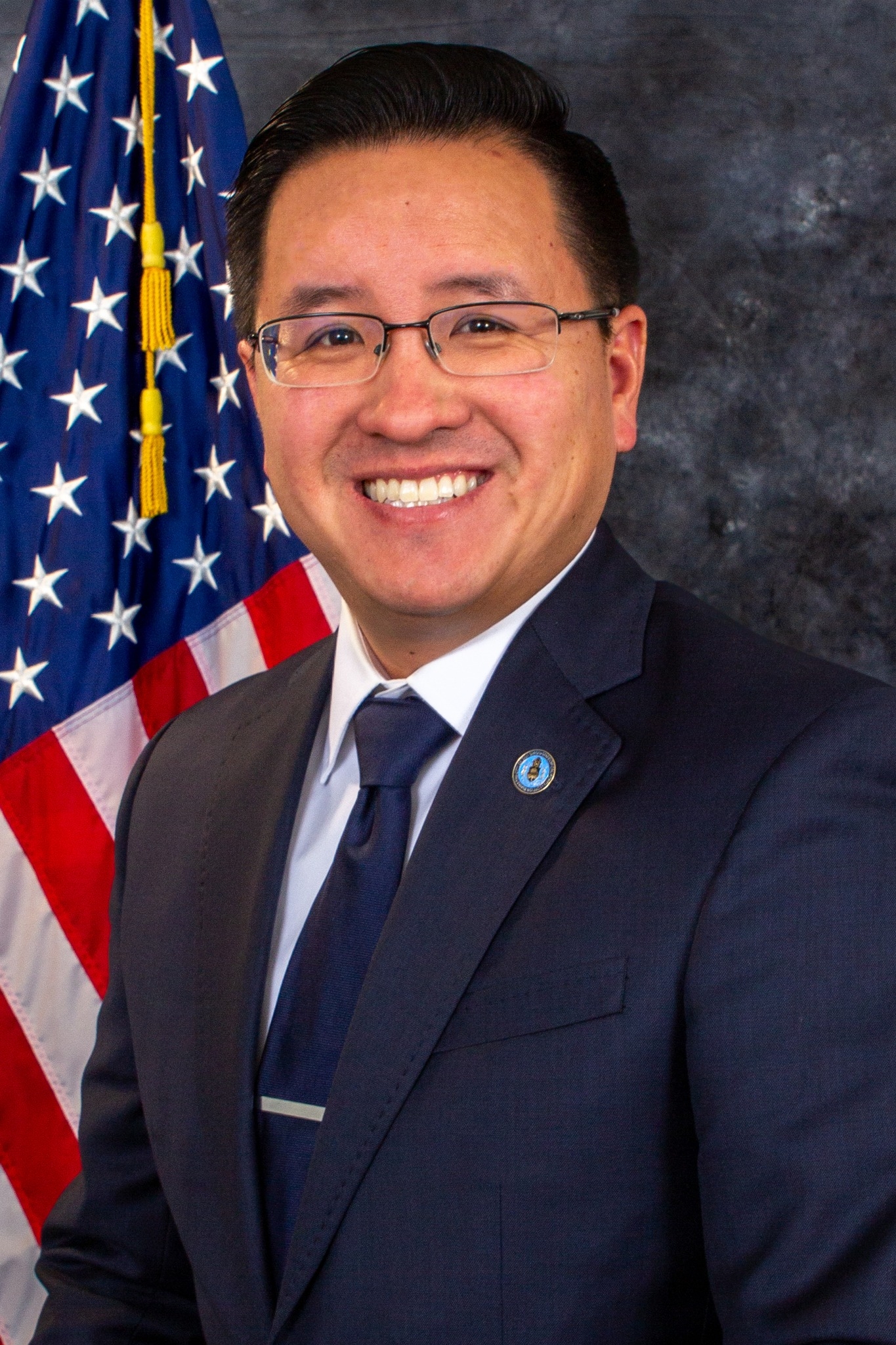
San Diego City Council Member & Council President Pro Tem Kent Lee Identity, Service, and a Vision of Spiritual Prosperity
BY LILLY CHENG, KENT LEE
On December 12, 2022, the San Diego City Council held its swearing-in and transition ceremony at the downtown San Diego Central Library auditorium. Four council members were sworn in that day, and the most notable among them was Kent Lee, the Asian American council member representing the Sixth District. At the time, he was the youngest Asian American political candidate elected to the San Diego City Council.
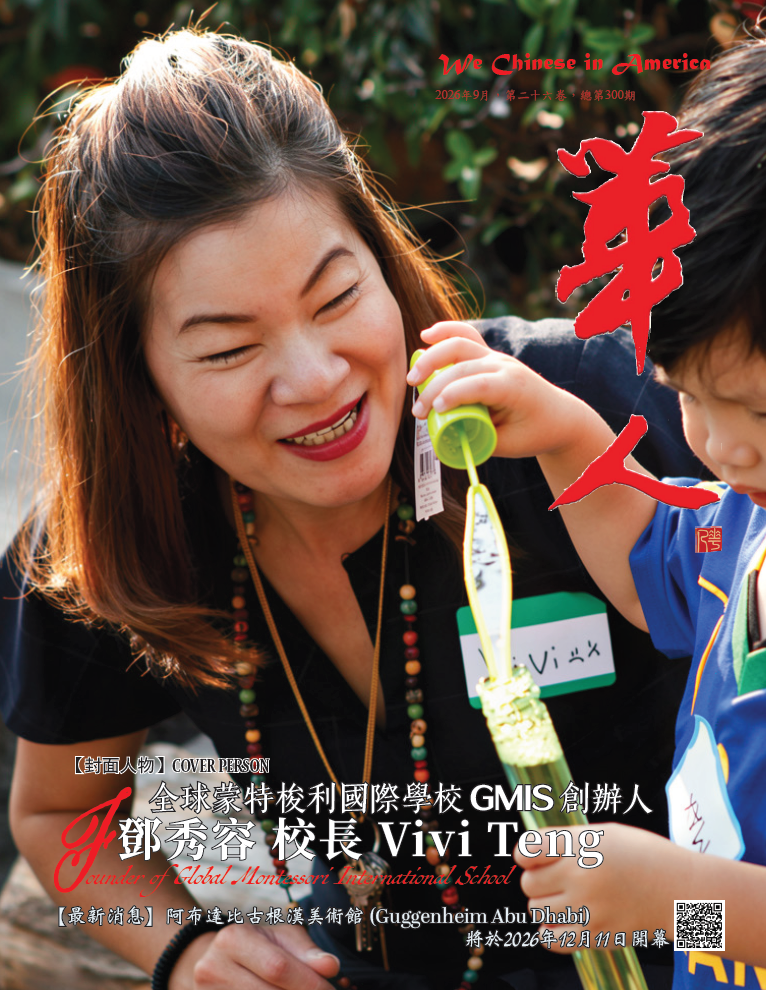
Earlier in June of the same year, Kent Lee appeared as the cover feature of WeChinese magazine, where he shared his motivations for public service and his political ideals. Born in Los Angeles, he represents a typical post-1980s generation, and he graduated from the University of California, San Diego (UCSD) with dual degrees in Economics and Biology.
Since 2016, he has served as the executive director of the Pacific Arts Movement, one of the largest media arts organizations in North America, dedicating himself to promoting Asian American and Pacific Islander visual storytelling. He is widely recognized for hosting the San Diego Asian Film Festival. His experience in the cultural and arts sectors has provided a strong foundation for his later work in public policy.
Nearly four years into his political career, WeChinese had the privilege of interviewing him again, offering the public a glimpse into how a young Asian American politician navigates the balance between ideals and reality. The interview also provided insight into how his political experience has gradually shaped and deepened his thinking, while outlining a broader vision and roadmap for the future. This trajectory of growth is inspiring, and he is expected to continue making a profound and lasting impact on the city and its communities, particularly within the Asian American community.
Life, Family & Future
Family roots, immigrant journeys, parenthood, and the road ahead
► Tell us about your family background.
Family-wise, it has always been a little complicated. My grandparents on both sides are from Southern China.Both families are Toisan, speaking Cantonese.My mother’s family later settled in Vietnam, while my father’s family ended up in Burma, which is where my parents were born. Both of them later immigrated to the United States, and I grew up in the Los Angeles area. My mother was the youngest of ten children, and my father was the youngest of seven I am currently married with two children.
My wife’s family background is also connected to Southern China—her mother’s grandparents are from Southern China, and her father is from Vietnam
► Where do you see yourself ten years from now?
I don’t have an answer for that. I didn’t plan my political path this way. When we met at the Newport Movement and the Generation Home Festival, my life had been focused on nonprofit work. Politics was not part of the plan, so it’s hard to say what the future holds. I ended up here because I wanted to serve the community, and this became a way to do that.Wherever I go next will be guided by the same principle: serving people.
► Knowing that you’re on the city council and a father of two, if you had a completely free day, what would you do?
I think I will catch up on sleep, because sleep deprivation is not a good thing. Right now, as we’re doing this interview, I’m actually at home, since the kids are on school break. Usually, when we have free time, we spend it with family in some way. Sometimes we like to travel and visit local attractions, just like many other families. The kids enjoy various activities, but we usually stay nearby in San Diego.
Driven by Purpose
Family, service, empathy, and the values that shape a life
► What drives you?
I think sometimes each of us needs to find things that give us a sense of purpose. For me, part of that purpose is that my job is to serve people in some way. That’s part of why I’m here. I can also say that about eight years ago we had our first child, and for me, family has become a very important part of my life. Of course, it’s not just because of my wife, Phuong, and our two children, but also because I have a responsibility to support them. Especially with our kids, part of our responsibility is to help them learn and grow, and that often means learning ourselves along the way—learning on the go, learning as we parent.
I’m sure every parent can attest that there are many moments when you wish you could do better or more because you are responsible for them. You also see yourself reflected in your children, and vice versa.
► What are your guiding principles in life?
Some of these principles come from my experience at Pac Arts. Aside from service, I believe that compassion, kindness, and empathy are very important.
Everything we do in life is connected to others in some way—whether it’s the people we work with, the people we impact, or the people we support. Being compassionate and empathetic, and understanding what others are going through at any given moment, helps us do our work better.I truly believe that empathy is very important, and this is something I learned during my time at Pac Arts, where part of their mission was to inspire more compassion among people.
Service is also one of my guiding principles—it’s not just about doing something, but about who you choose to be as a person and how that affects others.
Aside from service, I believe that compassion, kindness, and empathy are very important.
- Kent Lee -
Leadership, Mentorship & Role Models
Learning from others, building connections, and growing through experience
► How do you define leadership?
I spent years as part of another nonprofit organization, serving on its board, where we often discussed leadership, especially among college-age students.Many people think of leadership as something you do—you are a leader, or you show leadership. But I believe that, in many cases, leadership is actually about people. It's about knowing when to follow instead of always leading.Sometimes leading means following. Leadership is also about understanding the people you are working with, building relationships, and creating positive outcomes. It's more about the connections you make and the results you help achieve than just the act of doing something. That's how I define leadership—sometimes it means leading, and sometimes it means following.
► Who are your mentors?
I have to admit, I don't have a very direct answer to this question. Sometimes, you can learn from many different people, and it doesn't necessarily have to be your teacher, mentor, or someone in a formal leadership role. You'll find that everyone around you can teach you something in some way.
For me, there have been moments in my life when a former boss taught me a lot about working in the nonprofit sector. I've also learned about the kind of leader I don't want to be through observing other people. That’s actually very important. I've also received feedback that isn't always positive. Sometimes it's hard to hear, but it’s very important because we must recognize that there’s always more we can learn.
If we're unwilling to hear both the praise and the criticism from others, we might fool ourselves into thinking we're doing a great job all the time. But I believe it's crucial to listen to people who disagree, have different perspectives, or provide honest feedback—even if it's not all positive. I feel that, in the end, we all learn and grow from people like that.
► Do you have any role models?
I think there are a lot of people we look up to because of the path they created and the impact they've had. But it's funny—I'm not sure if you'd call it a role model in the traditional sense. For example, in San Diego, many people look up to Tom Hom because he paved the way, especially in the political realm, at a time when most people like us were not in a position to lead. He chose to step up, and many would consider him a role model. That's really great, because not many API leaders showed up sixty years ago, or even half a century ago. That's remarkable.
Also, when I was at Pac Arts, we all knew Lee Ann. In many ways, following in her footsteps, you have to appreciate and recognize everything she went through to create the organization.
I would say the same for anyone who has been serving this community—because you yourself are contributing. It's really good and important to have a few role models around us.
Public Service & Governance
Driving Community Service, Achievements, and Challenges
► Why did you choose to get involved in politics?
I chose to run at that time because someone asked me to. You might remember what I was saying earlier—sometimes people need to be recognized and supported, and leadership comes in different forms. I don't mean "someone asked" just literally; at the time, many people had at least suggested the idea.But sometimes people don’t naturally see themselves in certain roles. Before running, I never thought I would get involved in politics. So it took the right person at the right time to point out that I was in the right place at the right moment. It was a chance to represent the community in a meaningful way. I saw the work I was doing at Pac Arts as service-oriented, and someone pointed out that running for office was another way to continue that same type of work.
► Tell us about what you have done, your accomplishments as a member of the city council.
I was elected in 2022, with my first year in 2023. One of my proudest impacts has been serving in leadership roles. In my second year, I had the rare opportunity to chair both the Budget Committee and the Land Use Committee, which is uncommon as most council members oversee only one committee. That year, Monica was elected to the San Diego County Board of Supervisors, creating a need for someone to fill in. Both committees are considered the most powerful in the council, so leading both simultaneously was significant. It was a very challenging budget year with funding cuts, but not so severe that choices couldn’t be made. We had to make the right decisions to support the community. I'll admit there were times we fought with the mayor and colleagues to reach budget balance.
In the end, we passed a balanced budget unanimously with the full council and signed by the mayor—a rare accomplishment for a difficult year. Since that year, I've chaired the Land Use Committee annually, tackling one of San Diego's most challenging issues: housing shortage and high costs. I am very proud of this work. Last year, and again this month, I was reelected Council President Pro Tem. During my time in council, I am proud that our office functions as a team. We strive to communicate honestly with colleagues and the public, even with people we disagree with. In a time when trust in government is very low at all levels, It's more important than ever to acknowledge hard truths and speak honestly. I'm proud that we’ve taken on this challenge, even under pressure, to do what's right.up significantly. We face the same challenges as the public, and we need creative solutions.
►What are your current challenges that you see as a member of the city council?
I think the biggest challenge any council member faces is that the needs of the public are always much longer than what we can actually address. When we come into office, we quickly realize that there are problems we may never fully solve, even in four or eight years. For example, there are streets that haven’t been paved in 20 years—maybe we’ll never get to them. It's easy to make promises, but that’s also a way to disappoint people. So one of the biggest challenges is being honest with the public and prioritizing which problems we can tackle. Financially, the city faces tough times.
After COVID, federal funding ran out, and costs are rising for everyone, including the city. Our resources are roughly the same, but problems are growing faster than we can address them. Most people in San Diego have seen their incomes stagnate over the last 20 years, but rent, gas, food, and childcare costs have gone up significantly. We face the same challenges as the public, and we need creative solutions.
Uniting Diverse Voices
API Community and Community Economic
► What do you see as your social responsibilities as a member of the council?
I think of my role as having a social justice responsibility.
The council recognizes the value of San Diego's diversity and the importance of engaging all communities. Each council member has a responsibility to acknowledge historically underrepresented voices in public discussions. As a member of the API community, I recognize my unique responsibility to engage and represent this community meaningfully. This includes ensuring representation in city boards and commissions, and recognition during important events and commemorations.
For instance, the council commemorated the 50th anniversary of the fall of Saigon, a pivotal moment for many arriving in San Diego. We also recognized the Laotian community’s 50th anniversary in the US. These are two distinct histories, often mistakenly merged. Part of social justice is acknowledging and respecting the unique lived experiences of different communities.
A council member's own family and life experiences are valuable; sharing them ensures authenticity. "No story about me without me" is my philosophy. My family's experiences, including my mother fleeing Vietnam as a boat refugee, are shared experiences in San Diego, but must be acknowledged individually.
► What specific challenges does the API community face?
The API community, especially in San Diego, still has a long journey ahead to grow and collaborate together.In the last five or six years, we've seen the creation of the API Coalition as an effort to bring people together. During COVID, many of us came together to address issues around hate, as well as representation in city and county efforts.Sometimes we look at other communities—the Bay Area, Los Angeles, Orange County—where they've had generations to build a sense of community and power. Even then, it can be very challenging.
In San Diego, we have a very diverse API community, maybe more diverse within a relatively small geographic area than many others.
Our voices are strongest when we do two things: use our voices together meaningfully(through API Coalition or new San Diego Foundation initiatives) and avoid being lumped together. We also need to distinguish the unique differences and challenges of each community.
Even within the Chinese community, there are differences between those who have been here for one or two generations and newer immigrants or newcomers. From Southern China to Indochina, and from Burma to Vietnam, differences many people don't know; people often lump everyone together as "Asians."
We represent diverse voices from very different backgrounds. By being present and sharing these stories, we hope to help people further their understanding—though telling stories of diverse cultures in ways that deepen understanding is always a challenge.
Serving with Impact
Kent Lee’s Advice to the Next Generation
► What advice do you have for young people at this time when they are seeking advice and leadership ideas?
I think there are two big things that I would recommend to young people. One is to find a way to be engaged in our community. Engaged. And that can mean anything. I usually tell people to find something that you care about, you have an interest in, that you can be involved in. It could be volunteering, it could be work. But beyond just education, finding a way to be connected and engaged in the community can be really, really meaningful.
The second piece of advice I offer is closely related to what inspired me to assume this position and dedicate myself to serving others. It is to find ways to uplift people around you. Because not everyone sees themselves doing things, seeking leadership, seeking opportunities. Sometimes they need the push of a friend, a peer, a colleague, a neighbor, a family member—whatever it is.
A lot of times people need that inspiration and push from others to help them seek their own potential. And I think we each have a responsibility to do that for those around us.
So it's not just about our own success, because sometimes our success is built upon the success of others. And vice versa.
The more we can do to create those opportunities for other people, the more we're doing for the world around us.
► Do you have anything else that you want to tell us?
We are still in our first term. I think it is important for people to know that we plan to seek re-election this year. Not as a campaign pitch, but because public service can only continue if you are given the opportunity to keep serving. We have officially launched our re-election campaign. If we are fortunate enough to earn another term, it would allow us to continue this work for another four years. Opportunities come when you are prepared to take on responsibility.
One final point—something we did not discuss in depth, Convoy continues to change in significant ways—that is the ongoing transformation of the area. I do not often take personal credit, because these achievements are always the result of collective effort. We are all very proud of the Convoy sign that was recently erected.
The effort was originally led by Chris Cate, with support from the Asian Business Association and many others. That sign is a meaningful marker—it represents a sense of home in San Diego. Convoy holds deep significance for me. It represents an important chapter in the city's history and serves as a powerful symbol of what we are striving to achieve: giving the AAPI community a voice and the recognition it deserves.
Convoy is also where some of San Diego's newest housing developments are taking place, and it stands as one of the best examples of thriving small businesses—not just restaurants, but a wide range of community-rooted enterprises. All of this reflects the many individuals and groups who have contributed to the region's success in different ways.
This feels like a good place to end.