


Mantin Lu Raise Your Dragon Slayer
BY LILLY CHENG, MANTIN LU
About Mantin Lu
Mantin Lu defines himself as a leader and an educator dedicated to guiding and empowering others. With over 20 years of senior management experience in the global interactive entertainment and gaming industry, Mantin Lu has developed extensive leadership and organizational expertise. In 2008, his life took a profound turn when his two-year-old son was diagnosed with autism, which also challenged and shook his long-held belief that everything in life could be controlled. This experience led him into a deep journey of transformation in relationships, perspective, and personal growth. He later developed the “SLAY the Dragon” framework, using the metaphor of the Dragon Slayer to help families face challenges, rebuild connection, and grow through adversity.
Forging the Spirit of the Dragon Slayer
Defining Moments of Leadership
Growing up in Hong Kong, Mantin Lu showed a strong competitive spirit and natural leadership from an early age. At just five, he created a group called the “Space Station,” taking on the role of captain and assigning tasks to other children—an early sign of his desire not just to participate, but to lead and build systems.
His confidence was challenged when he was overweight as a child and became a target of bullying. In a pivotal moment on the playground, he chose to stand his ground rather than back down. This experience taught him that true strength lies not in fighting, but in resilience and self-advocacy.
By his mid-teens, Mantin Lu had transformed physically and developed strong self-confidence. Although life would later test his sense of control, the resilience he built during childhood became a defining trait. It shaped his belief that real strength comes from rising after adversity and continuing to lead.
Between Silence and Love
Mantin Lu’s family background is rooted in silence, responsibility, and quiet endurance, which deeply shaped his values and personality. His father was a reserved man who rarely expressed emotion or affection. At home, he would return at the same time each day, eat in silence, and seldom share his thoughts. Although emotionally distant, he was a consistent provider, and over time Mantin came to understand that responsibility itself can be a form of leadership. This realization reshaped his early judgment of his father and taught him the importance of honoring one’s obligations.
In contrast, his mother embodied kindness and selflessness. She was always willing to help others, sometimes to her own detriment, as she struggled with setting boundaries. From her, Mantin inherited compassion, but also learned the importance of self-protection and emotional boundaries.
Growing up between these two influences, he developed a dual awareness: discipline and responsibility from his father, and empathy and human connection from his mother. Though naturally introverted in his early life, this inner tension ultimately pushed him to grow into someone who values both achievement and emotional connection. These family dynamics became the foundation of his leadership style and personal transformation.
Becoming the Dragon Slayer
When Control Began to Collapse
Mantin felt an overwhelming sense of joy when he learned that a baby boy was on the way. The first two years after his son Manson was born were, in his experience, the happiest time in the family he was building.
Because Manson was their first baby, Mantin did not yet have a clear understanding of what a “normal” developmental path looked like. Manson was very quiet and preferred to play by himself. He could sit and look at books for hours. Mantin felt proud of this behavior, believing his son was very much like him. As someone who loved reading and identified as an introvert at heart, Mantin saw familiarity in Manson’s temperament.
When Manson ignored others or avoided eye contact, Mantin reassured himself that the child was simply independent and focused. He convinced himself that Manson’s difficulty with social connection was just a reflection of his own personality, and even interpreted it as a sign that his son was destined for something exceptional.
As time passed, more people began to ask questions. They wondered why Manson did not make eye contact or why he was not yet speaking. Mantin and his family often found themselves making excuses—not only to others, but also to themselves—trying to hold on to the belief that everything was fine.
The turning point came when Manson was around two years old. The family traveled to California to visit his cousin, who was less than a month younger than he was. When the two boys sat side by side, the difference in their engagement and development became impossible to ignore.
At that moment, Mantin could no longer deny the truth. The sense of control and high expectations he had carefully maintained began to crumble.
The Dragon Slayer Begins to Rise
After the diagnosis came out, Mantin initially struggled to accept reality and tried to escape through work. His son’s diagnosis changed everything—it shattered his beliefs and sense of self, forcing him to acknowledge that human will cannot control everything. He was confronted with a reality completely beyond his control.
However, he gradually came to a deeper realization: the greatest lesson he learned was that he had been playing the wrong game and fighting the wrong enemy. He was actually fighting his son’s behavior, which only led to a cycle of reminders, pleading, and yelling.
The real breakthrough came when he stopped trying to “fix” his son and instead began searching for the root cause. This shift marked the birth of the SLAY the Dragon framework. He reframed the struggle as a mechanical dysfunction in executive function, and chose to face reality directly, moving from blame toward healing.
The moment that once shattered him became the very foundation upon which he rebuilt his life and ultimately reshaped the path he continues to walk today.
SLAY your dragon for ripple effect
SLAY the Dragon (Framework)
The S.L.A.Y. framework represents Spot the Dragon, Level up your Gears, Assemble your Team, and Yearn for Victory. At its core, this framework shifts the focus away from trying to “fix” a child’s behavior and instead toward identifying and addressing the root cause: executive dysfunction.
The most important transformation within this framework is the reframe of behavioral challenges. Rather than attributing problems to the child themselves, they are externalized as a “Dragon”—a tangible representation of executive dysfunction. In doing so, parents move from “correcting the child” to “fighting alongside the child.”
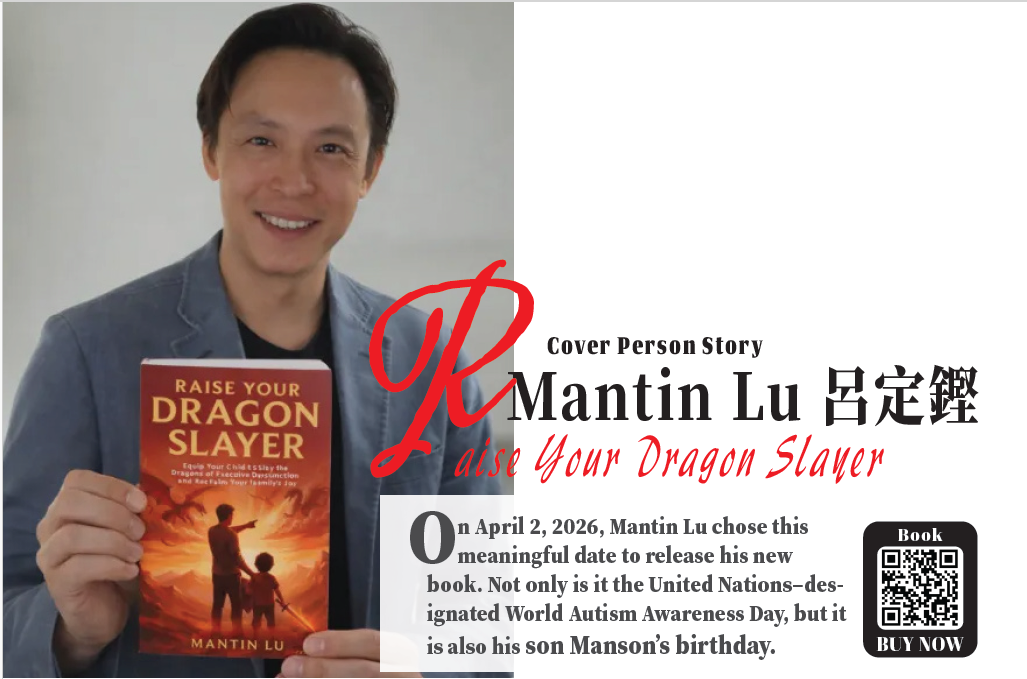
In this context, Mantin’s book Raise Your Dragon Slayer: Equip Your Child to Slay the Dragons of Executive Dysfunction and Reclaim Your Family’s Joy clearly demonstrates how the framework is applied in practice. It provides a wide range of “Gears”—practical, neuroscience-based tools designed to support children in developing independence in planning, organization, emotional regulation, and executive functioning skills. These tools have also been repeatedly validated through coaching practice.
Parents shift from being “Managers” to becoming “Coaches.” Family dynamics move away from conflict, chaos, or loss of control, and toward a unified system—an aligned team working together with shared purpose and support.
Ripple Effect (Motivation and Mission)
Mantin’s motivation is no longer about reaching a personal peak. It is about the ripple effect. In his work, he has seen that families, regardless of diagnosis, often face the same silent struggle: executive dysfunction that impacts daily life, relationships, and self-belief.
He has witnessed transformation in real moments. A young autistic child once said with a bright smile, “I made new friends today! I believe I am now more socialized.” A teenage girl shared, “I finished a lot of work and feel like I’m getting less and less distracted,” even though she previously defined herself as “someone who is always distracted.”
These breakthroughs fuel his purpose. When a child is no longer defined by their limitations but by their strengths, they do not just change their own trajectory—they influence those around them. That change spreads outward like ripples, from one family to another.
The same belief drives his public speaking. Every person has a story worth sharing. When someone finds the courage to speak their truth, they may never know who they will impact—but they will almost certainly transform at least one life, which may then inspire another.
This experience once broke him, but it also rebuilt him into who he is today and shaped the path he now follows.
My 2026 mission is specific: directly transform 200 families and reach 20,000 people through my keynotes—is not about numbers, but about impact: a world where one breakthrough becomes the blueprint for thousands more.
— Mantin