


by 張陽
章節五、清悲遙泛
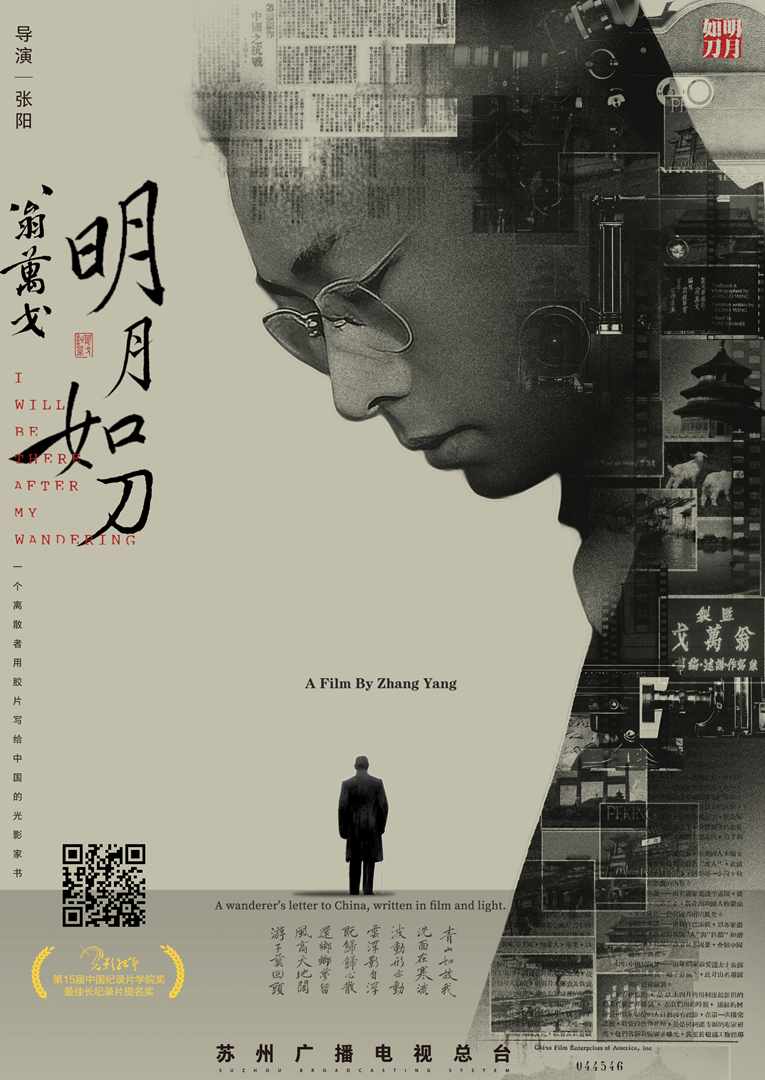
2023年在《翁萬戈:明月如刀》項目啓動之初,我便嘗試聯繫被譽為「中國紀錄片之父」的司徒兆敦先生,他的父親司徒慧敏曾在40年代與翁萬戈搭檔,在美國一同製作電影。8月31日,當我帶著本片提案參加首屆中國紀錄片大會時,卻意外得知司徒兆敦先生於當天病逝。微信對話框里,還保留著他前不久的回復——一張他在病床上微笑的照片,附言:「張先生我目前封閉治療,出院會聯繫您。」
1946年,司徒慧敏受周恩來派遣赴美學習電影技術,很快便加入翁萬戈創辦的中國電影企業美國公司,擔任副總經理,不久後司徒慧敏回國,二人就此失聯。50年代麥卡錫主義盛行時,FBI登門質問翁萬戈與共產黨的關係,翁萬戈這才知曉司徒慧敏的紅色電影人身份。
在麥卡錫主義的影響下,翁萬戈剛剛起步的電影事業被迫中止。為了謀生,他與妻子搭檔為美國娛樂影片做翻譯和錄音工作。
1955年,感到時局愈發艱難,翁萬戈只好放棄暫居異邦的想法,完成了美國入籍手續,這是他經過17年的深思熟慮後做出的決定,「我唯一安慰是繼續研究中國文化而永不忘卻自己的文化本位。」 [1]翁萬戈邊賺錢,邊為自己的紀錄片「拉投資」,得到資助後,他見縫插針地製作了《中國美術簡史》《中國古銅器》《中國歷代陶瓷》《中國歷代雕刻》《中國歷代繪畫》《中國佛教》等影片,微小並持續地輸出著中國文明的聲音。
中國電影藝術研究中心張怡系統研究了翁萬戈的電影生涯,她的碩士畢業論文是《鎔美鑄華:翁萬戈紀錄電影研究》「翁萬戈的電影事業始終與時代進行角力。面對戰亂、中美關係的轉暖或冷戰,變化的是他隨時運選擇擴張或收縮其電影事業,不變的是他始終堅守自己的報國理想,堅持向美國、甚至全世界傳播中國文化的電影理想。」她將翁萬戈描寫為一個「時中」的電影事業家形象。
張怡的導師,中國電影藝術研究中心研究生部主任黎煜,曾這樣總結翁萬戈的電影創作歷程:最初將電影作為教育工具,隨後成為救國的手段,最終化作中西方文化交流的橋梁。
翁萬戈的朋友、收藏家兼紀錄片人徐芝韻(Carolyn Hsu-Balcer)評價道,他的電影是寫給中國和中國文化的情書,印證了中國文化在他心底留下的深刻牽絆,也印證了他對電影力量的信念——作為一種通用語言,它能夠彌合文化與政治的鴻溝。 [2]
「1968年10月,老友貝聿銘數次打電話邀我為他設計的70年大阪萬國博覽會中華民國館創制展品……傳說日本政府即將承認中華人民共和國,於是台灣方面立刻決定一件古物都不送到日本,避免被扣。這麼一來,忽然出了『空』館問題。貝建築師想到了利用影音技術……因此認定了我……我制的無聲文化短片《漢文字的發展》《陶瓷》《蠶絲》《印刷》《書法》(每部三分到五分鐘)都要縮到八釐米,在當時最先進的連續放映機上演出……」 [3]
1970年,翁萬戈為大阪萬國博覽會創制了一組介紹中國文化的「短視頻」,這些輕盈的作品背後,竟藏著一個時局的秘密。歷史,總以某種不經意的方式,與當下對流,產生回響。
2025 年 4 月 9 日,美國政府升級對華貿易限制,對中國輸美商品徵收的綜合關稅 104% 正式生效,並宣佈將進一步上調至125%,經貿領域的壁壘在這一天陡然高築。也是在這一天,哥倫比亞大學東亞圖書館舉行了一場活動 [4],華美協進社捐贈至此的檔案資料面向公眾全面開放,這家見證中美百年文化交融的機構,將時光拉回半個世紀前:檔案中,躺著一份翁萬戈1968年向華美協進社申報的13集教育影片《中國歷史影片大系》提案,其中寫道:「這個項目將幫助抱有「中國中心觀」的國人以客觀視角看待自身歷史,也讓抱有『歐洲中心主義』的歐美人士以正確視角認識世界歷史的本相。」
1971年,《中國歷史影片大系》項目獲得華美協進社認可並正式立項,此時翁萬戈已年過半百,他與妻子收拾好行囊與器材,攜手開啓了一次史詩般的壯游:耗時三年半,先後四次環遊世界,走訪全球63家博物館,拜訪15位私人收藏家,為系列片蒐集珍貴資料。彼時中美尚未建交,歸國拍攝的道路被阻隔,他反而找到了一條講述歷史的新方法:借助拍攝散落海外的中國文物,映現中國不同時代的歷史脈絡。在拍攝電影的同時,他還隨身攜帶一台35mm膠片相機,對這批海外文物進行系統調查和記錄,拍攝了數萬張照片。 [5]
學者黎煜看來,翁萬戈一人,便是一座移動的中國文化「博物館」:他一己之力守護、整理、研究並分享翁氏家族的珍貴珍藏,更以紀錄片為載體,系統性地收集、展示海外的中國藏品——這樣的創舉,至今無人企及。
電影讓他一定程度上脫離了固有的社會結構,得以做各種影像實驗,以此接近並回歸自己的精神母體。「什麼是中國?國土是中國,但文化何嘗不是國土?」學者李鎮甚至認為「並非翁萬戈在創作作品,而是他被時代與文化所創作,他只是中國璀璨文化的一名代言人。」
1975年底,《中國歷史影片大系》製作完成,「這是迄今為止,唯一一部以系統性、時代性的方式,將中國文化製成的教育影片——不是以個人主觀的片段講演組合,而且盡量應用真實的文物作歷史的見證。」 [6] 1976年11月5日,影片在紐約大都會藝術博物館公映,每周放映4部,連放3周,千人座位的場館場場爆滿,遲到者只能倚牆站立。此後數十年間,這套影像作品被史密森尼學會、美國國會圖書館、大英博物館等機構收藏。它是翁萬戈電影生涯的集大成之作,也是終章。
今天看來,翁萬戈或許稱不上一位「成功」的電影人,他的大多數作品都未曾在美國電影院的幕布上閃耀過。這些影片更像一冊冊影像教材,輾轉於學校、圖書館與博物館之間,讓遠渡重洋的中國文明,在中美隔絕的時期,始終保有輕微的火光。
大功告成之際,他已飄零海外三十餘載。1976年5月14日,翁萬戈寫下《懷鄉》,道盡半生羈旅:
少年去國氣如狂,
老來歸夢漫他鄉;
月轉圓時心更冷,
清悲遙泛太平洋。
離散海外30年中,雙親已相繼離世,這些家信經過香港輾轉數周才能抵達翁萬戈手中。故鄉,已變成一場遙不可及的舊夢。
章節六、青山故我
1977年,59歲的翁萬戈移居美國東北部新罕布什爾州的一座小鎮,他在林中設計並建造了養老居所,取名「萊溪居」,他設計了若干書房,分別對應研究翁氏家族、中國書畫,西方文化,還有畫室和攝影棚。
這份清靜一年後迎來轉變——1978年底,中美兩國發表了《中美建交聯合公報》,1979年1月1日,中美正式建交,翁萬戈於當年秋天回國,令他驚訝的是,在北京前門飯店接待他的,竟是當年在美國一同拍攝電影的司徒慧敏。此時的司徒慧敏,已擔任中國文化部副部長,30年滄桑過往細數之後,翁萬戈受邀為中國製作第一本向世界介紹故宮的書籍, 「我可以在故宮每一個角落自由走動,為了方便打燈,我甚至還可以挪動龍榻。」 [7]
1982年,耳順之年的翁萬戈回到最初引領並陪伴自己踏足電影事業的華美協進社,出任社長。彼時的「華美」正深陷經營危機與方向的迷失,他以1美元年薪入主,帶領社團扭虧為盈,先後扶持和主持了39場中國文化主題展覽,為華美協進社開啓了新階段,也欣然結束了自己40年的電影生涯,往後捐贈文物、著書立作,成為20世紀重要的書畫鑒賞和收藏家,這又是一段傳奇的篇章——我們的影片也在此擱筆。
《青山故我》
青山如故我,洗面在寒流。
波動形亦動,雲浮影自浮。
既歸歸心歇,還鄉鄉夢留;
風高天地闊,遊子莫回頭。
翁萬戈的一生,似乎總在扮演他人故事的客串者,在歷史的備弄里出現又消失,很難拼湊出一個渾然的整體。李小龍言「be water」,翁萬戈也是以水的姿態連接不同的板塊與社群,不耀眼,但恰好因此而柔和、包容, 「你必須要學會忘懷得失,just follow the flow」 [8]。他在太平洋兩岸擺渡,在文化隔閡中縫補,懷揣無常的命運與士子之心,一次次重新出發,用鏡頭安撫離亂,捕捉文明,辟出一條通往宏大歷史的影像小道,散落在道旁的吉光片羽,讓兩個時空奇妙地糾纏,我借此一遍遍穿越,成為歷史現場的訪客。
2025年的最後3個月,紀錄片《翁萬戈:明月如刀》從剪輯軟件中緩緩生長,終至渲染成型,這過程彷彿是我與萬戈先生在紀錄片客廳中的一次長談,影片完成,他起身揮手作別。回顧三年創作,也像一場「刻舟求劍」的旅程,在時間長河上,每個人都是舟中過客,翁萬戈在船身留下的關於電影、關於中國的「細痕」,或許無法帶我們找到那把「劍」,但有了這些痕跡,就會有人不斷起心、動念。正如他的那句旁白:逝者如斯,未嘗往也。今之所存,深植往昔。
一位朋友在觀影後寫下的短文,於我心有戚戚焉,謹以此為本文作結:
萬夫投戈,明月如刀。所謂少年心氣,也許就是如此。人生有時需要一些靜氣,去聆聽自己的聲音,辨認心底最真切的關懷;也需要一些銳氣,能無畏地追尋心之所向。念茲在茲者,恰如明月高懸,映照萬川。它是指引,也是凝視,容不得人回避,於是一生之心血,皆繫於此。
[1]翁萬戈.八十自述[M]. 第一版.上海:上海書畫出版社,2026,78
[2]出自哥倫比亞大學「Pacific Crossings: Wango Weng and his Film Collection at Columbia」會議中的陳詞https://weai.columbia.edu/events/pacific-crossings-wango-weng-and-his-film-collection-columbia
[3]翁萬戈.八十自述[M]. 第一版.上海:上海書畫出版社,2026,86
[5]2021年,嘉德藝術中心寇勤選出1000余幅照片,整理出版《海外遺珍:翁萬戈鏡頭里的中國文物》一書。翁萬戈在前言中寫道,「希望這些圖片雖小,也像燦爛的群星照到大地的許多角落。」
[6]翁萬戈.八十自述[M]. 第一版.上海:上海書畫出版社,2026,95
[7]2016年翁萬戈錄音
[8]翁萬戈.口述資料[Z].波士頓美術館,2018.
By Lilly Cheng
" The museum can be nowhere else but here. Should the Pyramids disappear, the museum becomes incomplete. "
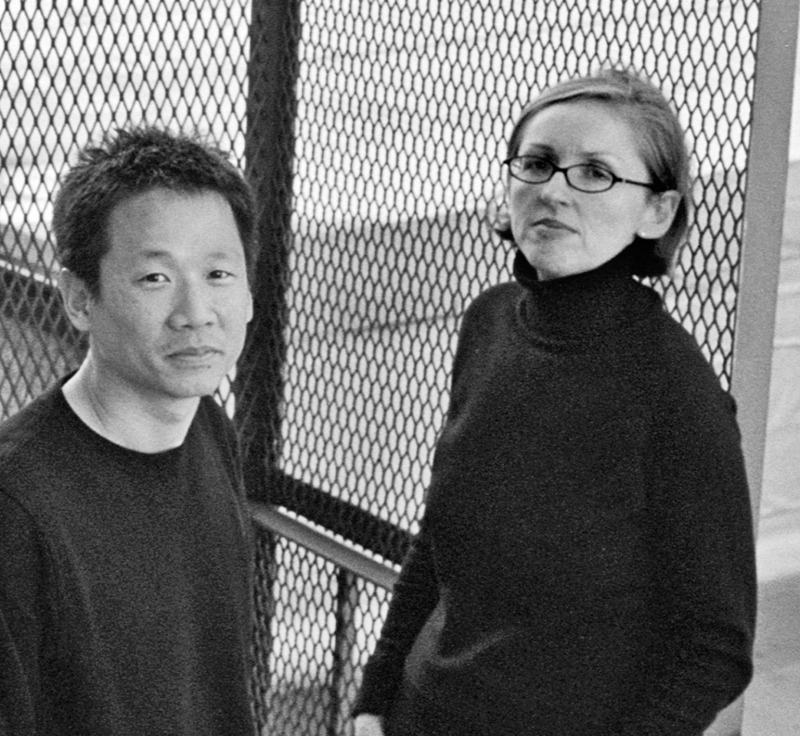
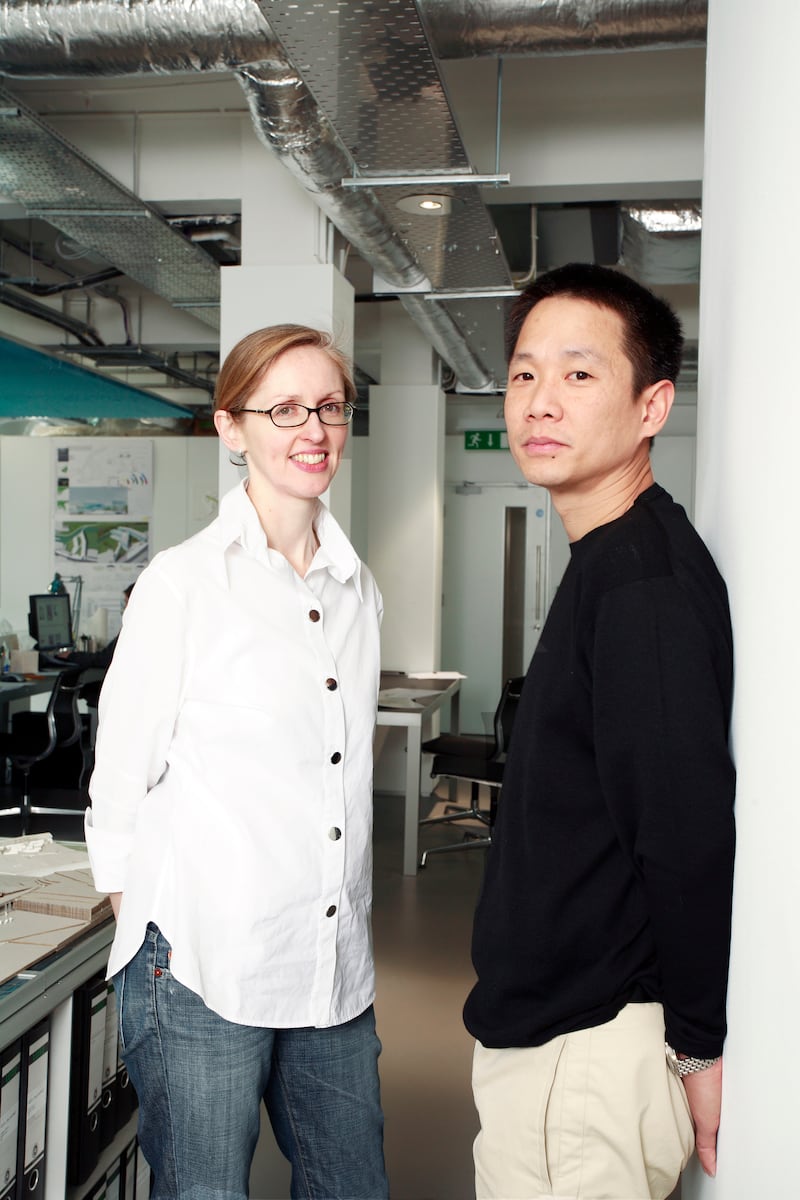
Egypt is one of the world's oldest civilizations, and the Pyramids remain one of humanity's most iconic symbols. In 2025, the Grand Egyptian Museum (GEM) near the Pyramids of Giza officially opened, presenting Egypt's thousands of years of cultural heritage. The museum was designed by Chinese-born architect Shih-Fu Peng, his wife Róisín Heneghan, and one of their students, Edel Tobin.
Peng received his Master of Architecture degree from Harvard University in 1992, where he met Heneghan. After working in New York, they founded heneghan.peng.architects in 1999 and later moved their firm to Dublin.
In 2002, their team entered Egypt's international design competition for the museum. Their anonymous proposal was selected from more than 1,500 entries worldwide. Their design was guided by a powerful concept: “The Pyramids are Egypt's gift to the world.” They envisioned a museum that would not only preserve Egypt's ancient civilization but also create a dialogue with the Pyramids, connecting the past and the present.
Unlike traditional competitions, the architects' identities were revealed only after the winning concept was selected. Their success came from the depth of their vision, leading to a landmark project completed after more than two decades of planning and construction.
On February 28, 2026, Shih-Fu Peng gave a presentation to Phi Lambda US. It was his first time speaking to an audience outside the architecture profession.
In his introduction, his nephew-in-law John Liu shared a defining moment in Peng's remarkable career.
Excerpted from John Liu’s introduction:
"… One day in 2003, Shih-Fu received a letter from overseas and announced to Róisín that they had finally won a competition. When asked 'Which one?' he replied, 'The Grand Egyptian Museum,' one which would be the largest museum in the world for a single civilization, dedicated to Ancient Egypt and its culture, society, and artifacts. Incredibly, the fledging and then totally unknown heneghan peng architects had beaten 1,556 other entries from 82 countries for one of the architectural world’s most prestigious and coveted assignments. When I heard the news, I remember saying to myself, 'Shih-Fu and Róisín just took a road trip in their quirky and somewhat unreliable Saab 9-3 sport sedan and won the 24 Hours at Le Mans!.'"
On July 18, 2026, the Cheng TCAE&B Online Seminar, organized by the Chinese Cultural Center at San Diego State University, featured Shih-Fu Peng, co-founder of Heneghan Peng Architects, as the keynote speaker. Peng personally shared the inspiration, vision, and design journey behind the Grand Egyptian Museum (GEM), explaining the ideas and philosophy that guided him and his team throughout the project.
The seminar also featured San Diego architect Mr. Joseph O. Wong as the guest co-host, who conducted an in-depth interview with Peng, exploring the museum's architectural concepts, design challenges, and the ways in which the project bridges contemporary architecture with the heritage of ancient Egyptian civilization.
About Grand Egyptian Museum
The Pyramids, Desert Landscape, and Site Topography
Shih-Fu Peng explained: “We did not visit the site in Stage 1. In Stage 2, we visited the site. We realized then that only the Pyramids can stand tall on the plateau and nothing else. We pushed our museum room down so that its coplanar with the Desert Plateau. The Pyramids stand as solitaires."
The First Guiding Idea That Shaped His Proposal
Egypt begins with its landscape. The Nile carved through the desert, creating the Nile Valley and the Desert Plateau, separated by more than 60 meters in elevation. This landscape is both geological and symbolic. The Nile Valley represents life, with its intense green vegetation expressing vitality, while the Desert Plateau represents death, where the tombs of the Pyramids stand. This contrast between life and death, between the fertile valley and the desert, became the starting point of our design thinking.
Coordination and Management Challenges During Design and Construction
Shih-Fu Peng explained: "We developed a highly sophisticated three-dimensional building grid that integrated all building systems and services. Unlike a traditional building grid, this system does not simply cover the building itself; it treats the entire site as one continuous gridded landscape. For us, there is no building—only landscape."
Challenges in Material Selection and Stone
The original design concept for the Grand Egyptian Museum was to use translucent alabaster to create soft, natural lighting effects. However, due to the fragility of alabaster, the team explored onyx as an alternative while facing challenges in the consistency of natural stone.
The team conducted accelerated aging and UV tests to evaluate the stone’s long-term performance and durability. To address variations in natural stone quality, they developed a fractal-based system that reduced almost 250,000 potential stone panel sizes to approximately 43, simplifying construction, reducing steel use, and lowering costs.
I had the privilege of visiting the museum in 2024, before it officially opened to the public. The project took 24 years to complete, growing from a three-person team—Shih-Fu Peng, Róisín Heneghan, and one student—to more than 100 architects, engineers, and local professionals. The result is a remarkable achievement, reflecting years of vision, collaboration, and dedication.
…that's really the fun of architecture is not to remove the problems. It's to actually have the problems and have to solve the problems because only through the solving of the problems that you ever end up with invention or creativity.
Q: Why did you become an architect??
It was actually not that complicated. My father was an architect, so I became an architect too. At the time, I didn’t really know what I was getting into, but it turned out well.
Halfway through my life, my father asked if I wanted to take over his office and clients. I said, “No, I want to make it on my own.” I knew the chance of success was only about 0.001%, but I still wanted to try.
The following year, he closed his office. I was like a typical young person seeking independence, wanting to create my own path but not knowing where to go next.
Fortunately, we were lucky enough to win a small project in Ireland, and then two more followed. There was nothing mystical or glamorous about it—we were simply fortunate and took the opportunities that came our way.
Q: What advice would you give to young people who are just beginning their careers in architecture?
I do not believe in advice that applies universally to everyone. Advice that is supposed to work for all people often ends up not being truly helpful to anyone.
Q: How do you view the impact of artificial intelligence (AI) on architectural design and creative work?
I actually like artificial intelligence very much, and I do not quite understand why so many people are concerned about it. The greatest value of AI is that it can help us complete many repetitive, tedious, and time-consuming tasks, allowing us to work more efficiently.
However, I believe AI still lacks true creativity at this stage. It can analyze, organize, and imitate existing information, but it cannot think like we humans do to generate completely new ideas, AI cannot think emotionally.
Shih-Fu Peng has always carried with him a quiet yet unwavering conviction: to remain a lifelong student. For him, learning has never been merely a stage of life—it is life itself, unfolding through an ever-curious mind that never ceases to ask questions.
What first nurtured his curiosity was his childlike way of seeing the world. Every path is worth exploring, and every small detail may hold a source of inspiration. New ideas, unfamiliar knowledge, and different historical perspectives are never challenges to what he already knows; rather, they are invitations to broaden his horizons. He listens attentively and observes carefully, believing that even the smallest detail can reveal profound truths.
He also approaches the humanities and history with deep reverence. As he came to understand the extraordinary significance of the Egyptian Pyramids, he recognized that the three monumental Pyramids rising from the desert stand not only as architectural marvels but also as enduring symbols of one of humanity’s greatest civilizations.
Yet curiosity is only the spark. What truly sustains Shih-Fu Peng is resilience and perseverance. When confronted with difficult problems, he never gives up easily. Such challenges arise often, and he has learned to live alongside them, constantly examining both the problems before him and the habits and limitations within himself. Where others see mastery, he sees only another level waiting to be discovered.
What ultimately defines him, however, is his humility. Shih-Fu Peng has never believed that wisdom belongs to any one individual. Knowledge flows through him like a gentle breeze passing through an open door. This humility has shaped the way he works with others. By sharing what he has learned, he deepens his own understanding; by helping others grow, he continues to grow himself.
To live as a lifelong learner requires courage. It means accepting that certainty is only temporary and recognizing that growth demands patience. Shih-Fu Peng walks this path with quiet confidence—remaining open through curiosity, moving forward with perseverance, and staying grounded through humility. Deep within, he has always understood that he is, above all else, still a sincere student of life.

親愛的讀者朋友們,
2024年的金秋時節,我有幸參觀了坐落於金字塔旁的大埃及博物館(Grand Egyptian Museum)。當我站在落地長窗前,遠眺古老金字塔,近看珍貴的埃及文物,彷彿感受到時間在此刻靜止。那一刻,我深深體會到光、時間與人性的交會。這份感動也不由得引發我的好奇:這座博物館的設計理念從何而來?又是誰創造了這座能與數千年歷史對話的建築?
本期封面人物——彭氏夫婦(彭士佛與妻子Róisín Heneghan),正是這座偉大建築背後的設計靈魂與核心團隊。他們以建築回應人類對永恆的追尋,透過清晰的空間秩序,創造了一座能與時間共存的作品,也呼應了著名建築師 Louis I. Kahn(路易斯.康) 對建築與時間的深刻思考:
「曾經存在的,一直都在;現在存在的,從未改變;未來將有的,早已有之。( What was has always been. What is has always been. What will be has always been.) 」
——路易斯・康(Louis I. Kahn, 1972)
希望讀者能跟隨本期封面故事,穿越時間的隧道,回望23年前那段充滿夢想、挑戰與創造的歷史,了解一座偉大建築如何從構想走向現實,並在人類文明的長河中留下永恆的印記。
-------------------------------------------------------
To Our Readers
In the autumn of 2024, I visited the Grand Egyptian Museum beside the Great Pyramids. Standing before the vast windows overlooking ancient monuments and priceless artifacts, I felt a profound connection between light, time, and human creativity.
This experience led me to wonder about the vision behind this extraordinary museum and the architects who transformed an idea into a place where history and the present coexist.
This issue’s cover story introduces architects Shih-Fu Peng and his wife, Róisín Heneghan, whose architectural vision and dedication contributed to the creation of the Grand Egyptian Museum, a remarkable cultural landmark. Through clarity of space, harmony of form, and deep respect for history and civilization, they created a building that transcends time and continues a dialogue with culture and humanity.
We invite you to journey back 23 years and discover how a dream became reality—and how architecture can leave an enduring mark on human civilization.
By 劉麗容 Lilly Cheng
埃及無可置疑是世界文明古國之一,想到埃及,人們便會立刻聯想到金字塔。這些位於尼羅河不遠處沙漠中的宏偉建築,千百年來一直是人類讚嘆的奇蹟。就在2025年,坐落於金字塔附近的大埃及博物館(Grand Egyptian Museum,簡稱GEM)正式向全世界開放。這座博物館承載著承先啟後的使命,不僅展示珍貴文物,更肩負著詮釋埃及綿延數千年文明的重任。其設計來自華裔建築師彭士佛(Shih-Fu Peng)及其夫人Róisín Heneghan,以及他們的一位學生Edel Tobin共同創作。
" 如果金字塔消失了,博物館也將變得不完整。"
彭士佛,1989年畢業於康乃爾大學,1992年取得哈佛大學建築碩士學位。畢業後,他曾在美國工作數年。夫人 Róisín Heneghan大學就讀於都柏林大學建築系,1978年以榮譽學位畢業,之後赴美工作及深造,並於哈佛大學取得建築碩士學位。兩人也因此在哈佛相識。
1992年至1999年間,彭士佛與Róisín皆任職於紐約建築師事務所,並積極參與年輕建築師專業社群。1999年,兩人於紐約共同成立heneghan.peng.architects建築事務所。2001年,因承接愛爾蘭政府建築設計案,事務所總部遷往都柏林,兩人也定居於此,除了從事建築設計之外,也投入建築教學工作。
2002年,埃及政府正式啟動大埃及博物館建築設計競圖。彭氏夫婦與團隊提交了他們對這座博物館的初步設計方案,並在全球超過1,500件參賽作品中脫穎而出,之後受邀提交更詳細的設計圖與模型。最終,他們的方案在眾多競爭者中勝出,成為首選,也開啟了這項歷時二十餘年的建設歷程,使其設計成為埃及開羅最顯著的地標之一。
在參與競圖的過程中,他們仔細思考幾個關鍵要素,並將這些理念融入設計之中,包括金字塔在埃及及世界文明中的重要地位、金字塔與尼羅河之間的地理關係,以及金字塔在沙漠環境中的色彩等。而其中最重要的核心理念是——金字塔是埃及送給世界的禮物。因此,博物館除了展示埃及千年文明之外,更應與金字塔遙遙相望,彼此守望相助,形成跨越時空的對話。
此次競賽是一場匿名的概念性競賽。這與我們熟悉的招標流程不同——並不是先選定建築師,再進行設計。而是在一開始採取匿名競賽,再選出勝出的概念設計方案,最後才揭曉建築師身份。他們之所以能夠勝出,正是因為這些理念;若沒有這些理念基礎,也就不可能有後續的發展。
2026年2月28日,彭士佛為「美國仁社」(Phi Lambda US)進行了一場演講,這是他第一次與行業外的人士進行演講。
他的姨父劉廣斌(John)給侄兒的開場介紹:
「今天的演講者是彭士佛,他是heneghan peng architects建築事務所的共同創辦人之一……夫妻兩人於哈佛畢業後搬到新澤西州普林斯頓,並在知名設計事務所Michael Graves & Associates工作。其事務所由後現代建築的重要先驅Michael Graves所創立。他們用自己存下來不多的積蓄,購買了當時最先進的電腦,一方面以電子遊戲設計太空船的工作作為副業;更重要的是,利用這些設備為heneghan peng architects做準備並提交建築競圖提案。2003年的某一天,彭士佛收到一封來自海外的信,他告訴Róisín,他們終於贏得了一場競圖。當被問到『是哪一個競圖?』時,他回答:『大埃及博物館(Grand Egyptian Museum)。』。令人難以置信的是,當時仍是剛起步、幾乎默默無聞的Heneghan Peng Architects,竟然擊敗了來自82個國家、共1556件參賽作品,贏得了建築界最具聲望、最令人嚮往的設計委託之一。當我聽到這個消息時,我記得自己心裡想著:『彭士佛和Róisín就像是開著他們那輛有點古怪、也不太可靠的Saab 9-3跑車去兜風,結果卻贏得了利曼24小時耐力賽(24 Hours of Le Mans) 一樣!』」。
彭士佛的姨父劉廣斌叫他的小名「佛佛」,對他的評價非常高。因為能在眾多競爭者中脫穎而出,被選為埃及博物館的設計師,這是一件非常不容易的事情,他們一家人都為他感到驕傲。他成長的期間,常常會到姨父母家裡,與姨父、姨母長期相處,感情十分深厚。當日演講他用深入淺出的方法讓與會的參予者都能感覺到身歷其境一同享受這偉大博物館的點點滴滴。
2026年7月18日,由聖地牙哥州立大學中華文中心主導的「Cheng TCAE&B」線上專題討論會,特別邀請彭士佛擔任主講人,親自分享他與團隊設計大埃及博物館(GEM)的初衷、理念與設計歷程。當日並由聖地牙哥建築師黃安和(Joseph O. Wong)先生擔任客座副主持人,與彭士佛進行深度訪談,探討博物館的建築理念、設計挑戰,以及如何在當代建築中回應古埃及文明與文化傳承。
關於大埃及金字塔
金字塔、沙漠景觀與基地地形:設計思考的基礎
彭士佛說:「第一階段競圖時,我們並沒有前往現場考察。直到第二階段,我們才有機會實地造訪基地。當時我們意識到,在這片高原上,唯有金字塔應該高高矗立,沒有任何其他建築應與之競爭。因此,我們將博物館主體下沉,使其屋頂與沙漠高原保持同一水平面,讓金字塔成為這片地景中唯一獨立而突出的存在。」
大埃及博物館設計的設計思考的起點
彭士佛表達:埃及的一切始於地景。尼羅河切穿沙漠,形成了尼羅河谷與沙漠高原,兩者之間存在六十多公尺的高差。這片地景同時具有地質與象徵意義:尼羅河谷象徵生命,以濃郁的綠色展現生機;沙漠高原則象徵死亡,金字塔陵墓便矗立於此。這種生命與死亡、綠洲與沙漠之間的對比,成為我們設計思考的起點。
建築材料的選材與石料上的挑戰
彭士佛表示:大埃及博物館最初的設計構想是採用半透明雪花石膏,希望利用石材透光的特性,創造柔和自然的光影效果。然而,雪花石膏本身較為脆弱,因此設計團隊後來改用同樣具有透光性的縞瑪瑙(onyx),但仍面臨天然石材品質不穩定的挑戰。
為了解石材長期使用後可能產生的變化,團隊進行了多項測試,包括加速老化試驗與紫外線測試,以模擬石材在未來一百年中的性能表現。由於天然石材存在品質差異與不可預測性,設計團隊進一步發展出另外一種方法,使不同品質的石材都能被有效利用。原本外牆設計可能需要將近25萬種不同尺寸的石板,透過分形設計後簡化為約43種尺寸,不僅降低施工複雜度,也減少鋼材使用與整體成本。
設計與施工過程中的協調與管理挑戰
彭士佛說:「我們建立了一套高度精密的三維建築網格系統,將所有建築與機電服務整合在一起。這個網格不同於傳統建築網格,它不僅涵蓋建築本體,而是將整個基地視為一個連續的景觀。因此,對我們而言,沒有建築,只有景觀。」
本人有幸在2024年博物館尚未正式開放的時候參觀了這個令人嚮往博物館。如此浩大的工程、如此精緻的設計——整整耗時24年,從最初只有彭氏夫婦及學生三人小組,很快就擴展到超過一百人。除了國際的工程師團隊,還有許多當地的工作人員,他們要進行協調如此龐大的工作,日以繼夜過著不眠不休的日子,最後的成果有目共睹。
" 建築的樂趣不在於消除問題,而是在面對問題與解決問題的過程中產生創造力。”
❓為什麼您會成為建築師?
其實沒有那麼複雜。我父親是一位建築師,所以我也成了建築師。當時我並不完全知道自己想做什麼,但最後的結果還不錯。
在人生某個階段,父親曾問我:「我有一間事務所,也有客戶,你想接手我的辦公室嗎?」我回答:「不用,我想靠自己成功。」他又問:「你確定嗎?」我說:「是的,我想試試看。我知道成功的機率可能只有 0.001%,但我還是想嘗試。」
第二年,父親便關閉了他的事務所。那時的我,就像一個典型的年輕人,渴望獨立,希望靠自己的能力闖出一條路,卻不知道未來會如何發展。
幸運的是,我們後來在愛爾蘭贏得了一個小型設計案,接著又陸續獲得另外兩個項目。其實,這一路並沒有什麼神奇或光鮮亮麗的故事,我們只是很幸運,也把握住了機會。
❓您會給剛踏入建築專業的年輕人什麼建議?
我並不相信放諸四海皆準的建議。這類建議適用於所有人,最後往往對任何人都沒有真正的幫助。
❓您如何看待人工智慧(AI)對建築設計與創意工作的影響?
我其實很喜歡人工智慧,也不太理解為什麼大家對它如此擔心人工智慧最大的價值,是能幫助我們完成許多重複、繁瑣、耗時的工作,提高效率。
然而,我認為人工智慧現階段仍缺乏真正的創造力。它可以分析、組織和模仿現有的訊息,但卻無法像人類一樣產生全新的想法,人工智慧也無法進行情感性思考。
彭士佛始終帶著一份安靜而堅定的信念:一生都是學生。對彭來說,學習從不是人生的某個階段,而是人生本身的展開方式。是一顆從未停止提問的好奇心。首先引領他好奇心的是他以孩子般的目光看待世界:每一條路徑都值得探索,每一個細微之處都可能藏著啟發。新的理念、不同的知識、歷史的觀點——對他而言,這些從來都不是對既有認知的挑戰,而是拓展視野的邀請。他認真傾聽,細緻觀察,因為即使最微小的細節,也可能蘊含深刻的道理。他對人文及歷史帶著敬畏之心。了解到埃及金字塔是如此無比的重要,三座坐落在沙漠之中鼎天立地的金字塔,代表著人類文明燦爛的一頁。
然而,好奇心只是火種。真正支撐彭不斷前行的,是堅韌與執著。當面對問題時,他不會輕易的放棄。而這種情況常常發生,他與問題相伴,也不斷審視自己的習慣與局限。當別人認為已是「精通」之處,他看到的卻只是等待被發現的下一層境界。
但真正定義他的是謙遜。彭士佛從不認為智慧屬於自己。知識在他身上流動,如同清風穿過敞開的門。這種謙遜也塑造了他的,也在加深自己的理解;當他幫助他人成長時,他自己也在繼續成長。
以終身學習者的姿態生活,需要勇氣。它意味著承認確定性是暫時的,也意味著成長離不開耐心。彭士佛安然地走在這條路上:以好奇保持開放,以堅韌持續前行,以謙遜扎根當下。他內心深處始終明白:自己依然是那位認真學習生活的人。