


(華人編輯團隊)
【題記】
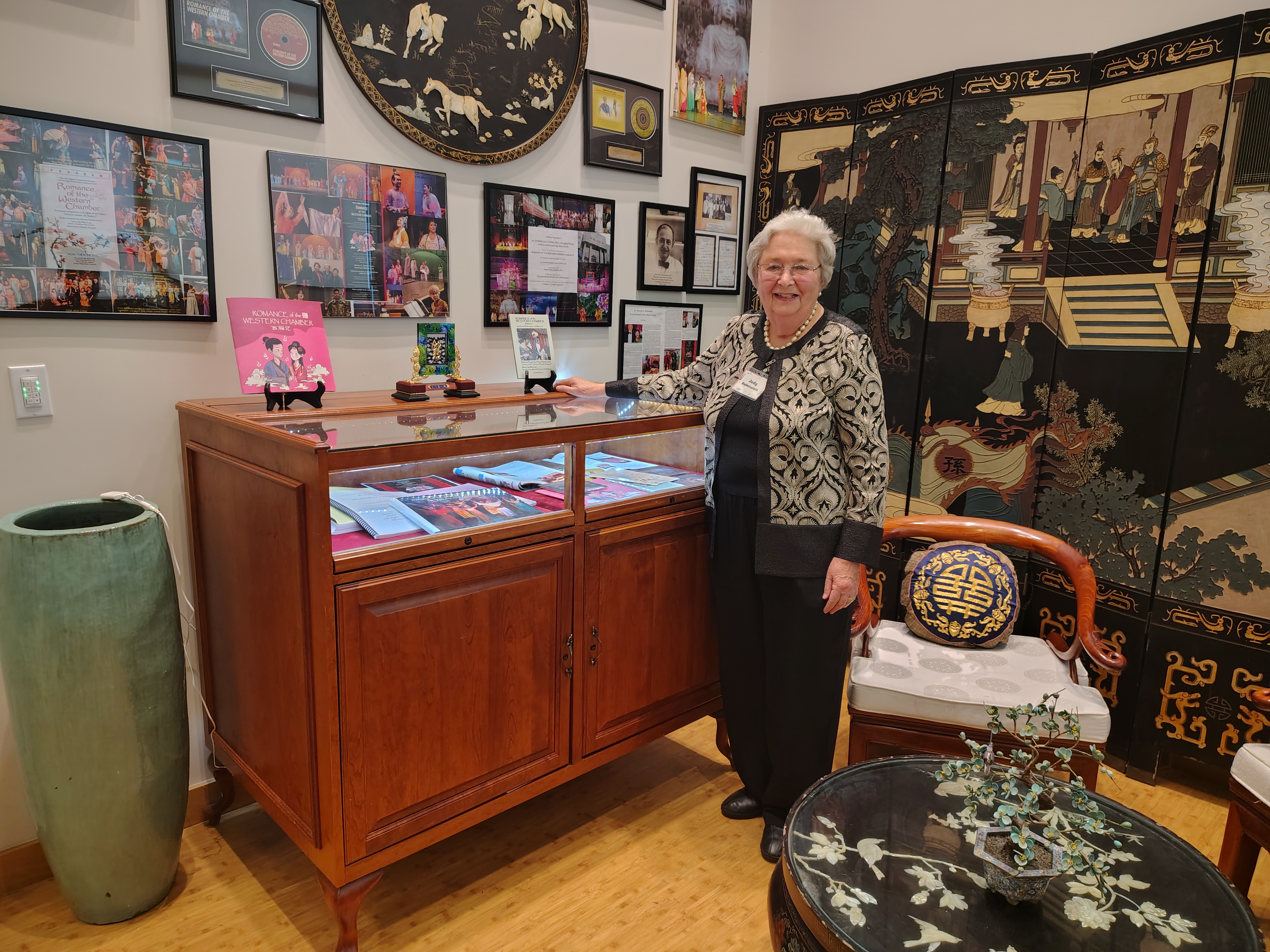
2026年3月28日,聖地牙哥州立大學中華文化中心舉行了一場別具意義的紀念牆揭幕典禮,紀念已故賀紅岩(Howard S. Rubenstein)醫師。這場活動不僅是對一位故人的追念,也是對文化、藝術與跨國友誼的致敬。
對許多人而言,Rubenstein博士是一位受過嚴謹醫學訓練的醫師;然而,在醫學專業之外,他更是一位對文學、戲劇、音樂與中國文化抱持深厚熱情的文化愛好者。
他的人生軌跡從哈佛醫學院的醫學教育開始,卻沒有止步於醫療領域。退休之後,他將生命中的另一份熱情投入文學與藝術創作,並與中國文化產生了深刻的交集。其中,最具代表性的作品便是英文音樂劇《西廂記》(Romance of the Western Chamber)。
這部作品不僅是一次文學經典的改編,更是一位美國醫學博士跨越文化疆界、以藝術理解中國文化的具體實踐。
從醫學走向藝術 - 人生的另一個舞台
賀紅岩醫師於1957年畢業於哈佛醫學院,取得醫學博士學位,之後投入醫療工作,並曾在哈佛大學健康服務中心擔任過敏科主任。在醫學領域,他接受的是講究邏輯、精準與專業判斷的訓練。
他一生對科學與藝術始終保持濃厚的興趣,涉獵文學、語言、音樂、視覺藝術與戲劇 。大學時期,他曾獲得古典希臘文學方面的 Noyes Prize。此後,他長期投入古典戲劇的翻譯與改編,作品包括埃斯庫羅斯(Aeschylus)的《阿伽門農》(Agamemnon)等 。退休之後,他有更多時間投入自己長久以來熱愛的文學與藝術,開始撰寫劇本、改編文學作品,並參與音樂劇創作。
醫學與藝術看似屬於兩個截然不同的世界,但兩者其實都需要對「人」有深刻的理解。醫學關注人的身體與健康,而文學與戲劇則探索人的情感、愛、選擇與生命經驗。魯賓斯坦醫生或許正是將這兩種對人的關懷,延續到人生不同的階段。
他的故事也提醒我們,專業不應成為人生的界線。當一個人願意持續學習、探索與創造,即使走過職業生涯、進入退休階段,依然可以開啟人生嶄新的篇章。
與中國經典相遇 - 《西廂記》的跨文化旅程
在賀紅岩醫師眾多藝術創作中,《西廂記》音樂劇尤其具有特殊意義。
《西廂記》是元代劇作家王實甫所作的著名雜劇,描寫張生與崔鶯鶯的愛情故事。 作品以才子佳人的愛情為主線,同時涉及家庭、禮教、婚姻與個人情感之間的衝突,因此數百年來一直受到中國讀者與戲劇觀眾的喜愛。
他之所以選擇這部中國古典名劇作為創作素材,並非只是將一個故事搬到舞台上,而是嘗試思考:一部深植於中國歷史與文化背景的古典作品,如何透過現代音樂劇的形式,讓不同文化背景的觀眾也能理解其中的情感?
因此,他以英文創作劇本與歌詞,同時將中國傳統音樂元素融入作品之中。在創作過程中,賀醫師聆聽了許多中國傳統民歌,並從中選擇既能體現中國文化傳統、又能引起西方觀眾共鳴的旋律。我有幸閱讀他的劇本,於編輯上及文化與歷史方面提出意見。
經過多次討論與修改,音樂逐漸調整至與歌詞相互呼應,並呈現出鮮明的中國文化特色。如此一來,《西廂記》不僅成為對中國古典戲劇的一次全新詮釋,也成為連結中西藝術傳統的一座橋樑。
當時,為了正式籌辦由浙江傳媒學院製作的《西廂記》音樂劇,我花了兩年多的時間,並多次前往中國。該校師生在校園內進行排練,最終於2011年9月9日在中國杭州東坡大劇院舉行世界首演。對賀醫師而言,這是他與中國文化之間非凡旅程中的一個重要里程碑。
此後,這部音樂劇於2017年在紐約TADA! Theatre以外百老匯(Off-Off-Broadway)製作形式演出。2023年1月,《西廂記》音樂劇也於Poway Center for the Performing Arts上演。
藝術 - 是跨越國界的共同語言
文化交流有時不需要翻譯。
一段旋律、一個故事、一場演出,都可能成為不同國家與不同世代之間彼此理解的橋樑。
《西廂記》之所以值得關注,正是因為它讓一個具有悠久歷史的中國故事,透過音樂劇這種現代西方舞台藝術形式,進入另一種文化語境。
愛情,是全世界都能理解的情感;對自由、幸福與人生選擇的追求,也不屬於任何單一文化。賀紅岩醫師從中國古典文學中看到的,不只是陌生的歷史背景,而是其中具有普遍性的人性與情感。
也因此,他的創作不只是「把中國故事介紹給美國人」,更是一種雙向的文化交流:西方藝術形式重新詮釋中國經典,而中國故事也為西方創作者提供了新的藝術靈感。
這種交流的價值,並不在於哪一種文化取代另一種文化,而在於兩種文化彼此尊重、彼此學習,最後共同創造出新的作品。
一位值得紀念的「文藝復興人」
賀紅岩醫師的人生,也讓人聯想到「文藝復興人」(Renaissance Man)這個詞。
所謂文藝復興人,是指一個人在不同知識與藝術領域都具有探索精神,不將自己限制在單一專業之中。賀紅岩醫師的一生正展現了這樣的精神。
他曾經是醫師,是醫學專業人士;退休之後,他又成為劇作家、編劇與音樂劇創作者。他沒有因為完成醫學專業而停止學習,反而在生命的另一個階段,重新發掘自己的創作能力。
更難得的是,他所選擇的藝術道路,最終與中國文化產生了深刻的聯繫。
從王實甫的《西廂記》,到英文音樂劇;從中國民間旋律,到西方舞台形式;從美國創作者,到中國杭州的舞台——這些元素共同構成了賀紅岩醫師獨特的文化足跡。
他的故事告訴我們,真正的文化交流,往往始於一個人對另一種文化的好奇與尊重。
紀念一個人 -也紀念一份友誼
2026年3月28日,聖地牙哥州立大學中華文化中心為賀紅岩醫師設立紀念牆並舉行揭幕典禮,其意義也因此超越了單純的紀念。
一個紀念牆,可以保存照片、文字、作品與人生記錄;但真正值得保存的,是一個人曾經留下的精神與影響。
賀醫師與中國文化的緣分,並不是短暫的接觸,而是透過文學、音樂與戲劇逐步深化。他用自己的方式理解中國,也以自己的創作讓更多人有機會接觸中國經典。
這種跨越國界的文化友誼,在今天依然具有重要意義。
在世界愈來愈緊密的時代,不同文化之間需要更多理解,而藝術往往是最柔軟、也最持久的橋樑。一個故事可以跨越語言,一首歌可以跨越國境,一部戲劇也可以讓不同文化背景的人,在同一個舞台上感受相同的情感。
賀紅岩醫師留下的,正是這樣一座文化的橋。
他的生命從醫學開始,卻在藝術中延伸;他的創作從美國出發,卻與中國經典相遇;而他的《西廂記》音樂劇,更將中美兩種文化以藝術的方式連結在一起。
今天,當人們站在紀念牆前,回望賀紅岩醫師的一生,我們所看到的或許不只是「一位醫師」或「一位藝術家」,而是一個始終保持好奇心、願意跨越界線、並以文化尋找共同語言的人。
他用一生證明,人生從來不只有一條道路;文化也從來不只有一種表達方式。
而真正珍貴的文化交流,往往就發生在兩種不同世界相遇的那一刻。
賀紅岩醫師與中國文化的故事,正是這樣一段跨越國界、跨越專業,也跨越時間的藝術與友誼。
Howard S. Rubenstein, M.D.
A “Renaissance Man” of U.S.–China Cultural Friendship
His Enduring Connection with Chinese Culture
BY WeChinese Editorial Team
On March 28, 2026, the Chinese Cultural Center at San Diego State University hosted a meaningful dedication ceremony for a memorial wall honoring the late Howard S. Rubenstein, M.D. The event celebrated not only his life, but also the power of culture, art, and friendship across borders.
To many, Dr. Rubenstein was a physician with rigorous medical training. Beyond medicine, however, he was deeply passionate about literature, theater, music, languages, and cultures
His career began with medical training at Harvard Medical School, but his journey did not end in medicine. After retirement, he devoted himself to literature and the arts, developing a deep connection with musical theater. Among his most notable creative works was the English-language musical Romance of the Western Chamber.
The musical was more than an adaptation of a classic Chinese literary work. It was also a remarkable example of an American physician crossing cultural boundaries and discovering a deeper understanding of China through art.
From Medicine to the Arts: A New Stage in Life
Howard S. Rubenstein, M.D., graduated from Harvard Medical School in 1957. He later pursued a career in medicine and served as chief of allergy at Harvard University Health Services. His medical training emphasized logic, precision, and professional judgment.
Throughout his life, he maintained a deep interest in both science and the arts, exploring literature, languages, music, visual arts, and theater. During his college years, he received the Noyes Prize for his work in classical Greek studies. He later devoted himself to translating and adapting classical dramas, including Aeschylus’s Agamemnon. After retirement, he had more time to pursue his long-standing passion for literature and the arts, writing plays, adapting literary works, and contributing to musical theater.
Medicine and art may appear to belong to entirely different worlds, but both require a deep understanding of people. Medicine focuses on the human body and health, while literature and theater explore emotions, love, choices, and life experiences. Dr. Rubenstein carried this understanding of humanity into a new chapter of his life.
His story reminds us that a profession should never define the boundaries of a person's life. With a willingness to continue learning, exploring, and creating, a new chapter can begin at any age—even after retirement.
Encountering a Chinese Classic: The Cross-Cultural Journey of Romance of the Western Chamber
Among Dr. Rubenstein's artistic endeavors, Romance of the Western Chamber holds a special place.
Originally written by the Yuan Dynasty writer Wang Shifu, Romance of the Western Chamber tells the love story of Zhang Sheng and Cui Yingying. Beyond romance, the story explores family expectations, social traditions, marriage, and individual emotions. For centuries, it has remained one of the most beloved works of classical Chinese drama.
Dr. Rubenstein's choice of this classic was more than simply bringing an old story to the stage. He sought to explore how a work deeply rooted in Chinese history and culture could be presented through the modern musical theater tradition so that audiences from different cultural backgrounds could connect with its emotions.
For Western audiences, the English-language script provided an accessible entry point, while the Chinese melodies and story preserved the work's cultural identity. The meeting of these two artistic traditions gave the musical its distinctive cross-cultural character.
Therefore, he wrote the script and lyrics in English while incorporating elements of traditional Chinese music into the production. During the creative process, Dr. Rubenstein listened to many traditional Chinese folk songs and selected melodies that reflected Chinese cultural traditions while also appealing to Western audiences.I had the privilege of reading his script and offering my editorial and cultural/historical comments. Through repeated discussion and revisions, the music was shaped to complement the lyrics and convey a distinct Chinese character. In this way, Romance of the Western Chamber became not only a new interpretation of a Chinese classical drama, but also a bridge between Chinese and Western artistic traditions.
It took me more than two years and multiple trips to China to formally organize the production of the Romance of the Western Chamber presented by the Zhejiang University of Communication. Their faculty and students rehearsed on campus and finally on September 9, 2011, the musical made its world premiere at the Dongpo Grand Theater in Hangzhou, China. For Dr. Rubenstein, this was an important milestone in his remarkable journey with Chinese culture.
The musical was later presented in an Off-Off-Broadway production at TADA! Theatre in New York in 2017. In January 2023, Romance of the Western Chamber was also performed at the Poway Center for the Performing Arts.
Art as a Universal Language Across Borders
Cultural exchange does not always require translation.
A melody, a story, or a performance can become a bridge connecting people from different countries and generations.
The significance of Romance of the Western Chamber lies in its ability to bring a centuries-old Chinese story into a different cultural context through the modern Western form of musical theater.
Love is an emotion understood around the world. The desire for freedom, happiness, and the right to make one's own choices belongs to no single culture. In the Chinese classic, Dr. Rubenstein saw not simply a story from an unfamiliar historical tradition, but universal human emotions and experiences.
His work therefore represented more than introducing a Chinese story to an American audience. It was a two-way cultural exchange: Western artistic forms reinterpreted a Chinese classic, while the Chinese story offered new inspiration to a Western creator.
The value of such exchange does not lie in one culture replacing another, but in cultures learning from and respecting one another and, ultimately, creating something new together.
A “Renaissance Man” Worth Remembering
Dr. Rubenstein's life brings to mind the term “Renaissance Man”—someone with a broad curiosity and a willingness to explore different fields of knowledge and the arts rather than limiting himself to a single profession.
His life reflected this spirit. He was a physician and medical professional, yet after retirement he became a playwright, screenwriter, and musical theater creator. Completing his medical career did not mark the end of his learning. Instead, he used a new stage of life to rediscover his creative abilities.
Even more remarkable was the way his artistic journey became deeply connected with Chinese culture.
From Wang Shifu's Romance of the Western Chamber to an English-language musical; from Chinese folk melodies to Western theatrical forms; from an American creator to a stage in Hangzhou—these elements together form Dr. Rubenstein's unique cultural legacy.
His story reminds us that meaningful cultural exchange often begins with one person's curiosity about and respect for another culture.
Remembering a Life, and a Friendship
On March 28, 2026, the SDSU Chinese Cultural Center dedicated a memorial wall to Dr. Rubenstein. The significance of the occasion therefore went beyond simply remembering one individual.
A memorial wall can preserve photographs, writings, creative works, and personal records. But what is truly worth preserving is the spirit a person leaves behind and the impact he has had on others.
Dr. Rubenstein's connection with Chinese culture was not a brief encounter. Through literature, music, and theater, it deepened over time. He sought to understand China in his own way and, through his creative work, gave others an opportunity to discover Chinese culture and classical literature.
This kind of cross-border cultural friendship remains meaningful today.
In an increasingly interconnected world, greater understanding among cultures is essential. Art can be one of the gentlest—and most enduring—bridges. A story can cross a language barrier. A song can cross national borders. A play can bring people from different cultural backgrounds together to experience the same emotions on one stage.
This is the kind of cultural bridge Dr. Rubenstein left behind.
His life began in medicine but found another dimension through the arts. His creative journey began in the United States but eventually encountered a Chinese classic. Through Romance of the Western Chamber, he connected two cultures through the universal language of art.
Today, as we stand before the memorial wall and look back on the life of Dr. Rubenstein, we see more than a physician or an artist. We see a person who remained curious, was willing to cross boundaries, and sought common ground through culture.
His life reminds us that there is never only one path in life, nor is there only one way to express a culture.
The most meaningful cultural exchanges often happen at the moment when two different worlds meet.
The story of Dr. Rubenstein and his connection with Chinese culture is precisely such a story—a journey of art and friendship that crossed borders, professions, and time.
BY LILLY CHENG
跨越時間與距離,友誼依然延續
In late August 2026, a long-awaited reunion took place in the Mu Us Desert of Inner Mongolia after 26 years of separation.
There was no luxurious restaurant or elaborate feast. Instead, the table was filled with seasonal vegetables gathered locally in the desert and simple, home-cooked dishes. Every dish carried Yin Yuzhen’s heartfelt wishes for her old friend who had traveled thousands of miles to see her.
About the story... ...
One was a woman from rural China; the other, a retired American teacher.
Twenty-six years ago, a $5,000 donation brought together two people who had never crossed paths. After meeting for the first time in 2000, they lost touch. For the next 26 years, one remained in China while the other returned to the United States, each continuing on a separate path.
Then, in 2026, their long-lost friendship was reconnected, and two old friends separated by thousands of miles finally met again. When they stood face to face, the barriers of language and nationality seemed to disappear.
More than a decade ago, I first learned about Yin Yuzhen through a news report. In the footage, she carried tree seedlings on her back, taking one difficult step after another through the endless sand. Her determination deeply moved me and inspired me to meet this woman living in the Mu Us Desert and help more people learn her story.
Through this connection, Yin and I gradually became close friends. Although we have lived thousands of miles apart, we have remained in touch. This time, I also became a witness to and participant in their long-awaited reunion.
Twenty-six years ago, Sakolsky donated $5,000 to support Yin’s tree-planting efforts. The donation not only brought two strangers together but also helped set in motion the planting of trees across the desert.
In the days before their reunion, I spoke with them by video call and offered my blessings. I told Sakolsky that seeing Yin again would be an important moment in his life and encouraged Yin to cherish their long-awaited meeting.
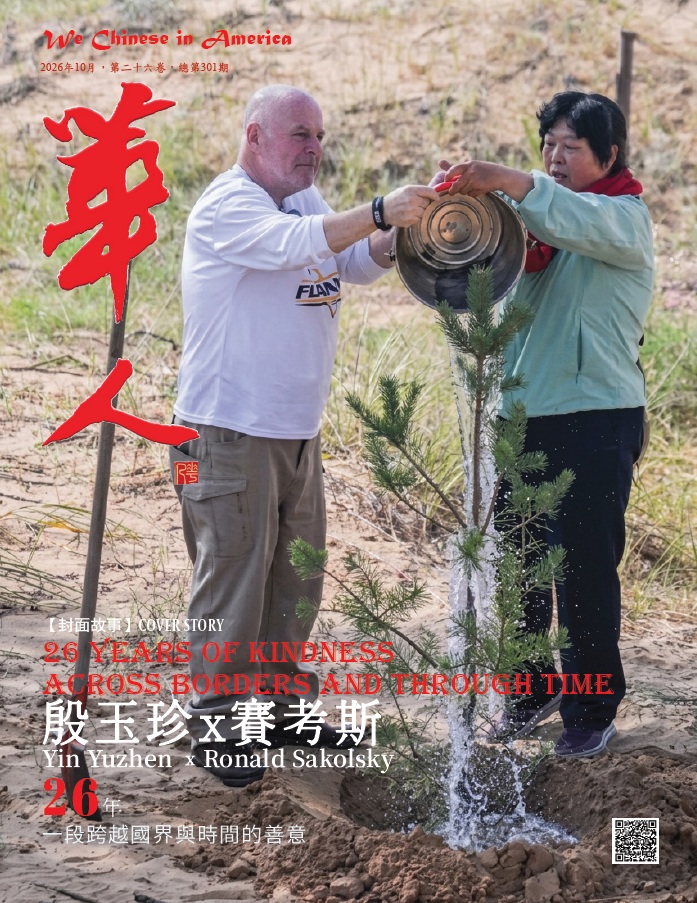
When they finally stood face to face, Ronald Sakolsky’s eyes filled with tears. Yin opened her arms and gave him a big hug.
They did not say much, but that embrace carried 26 years of emotions and longing left unspoken.
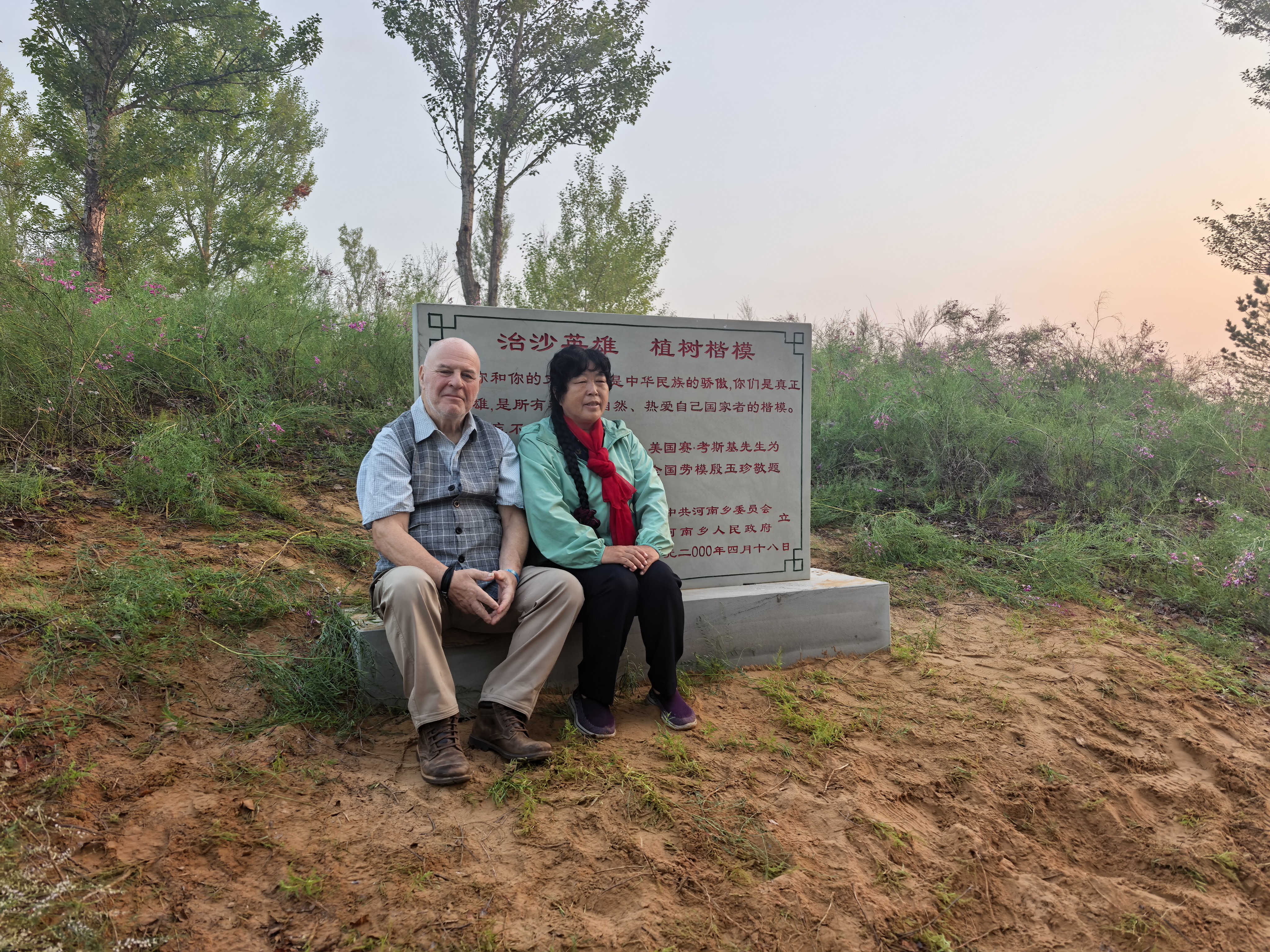
Standing on land now covered in green, Sakolsky finally saw how the tree-planting efforts supported by his donation had transformed the landscape. What was once barren land had become a forest.
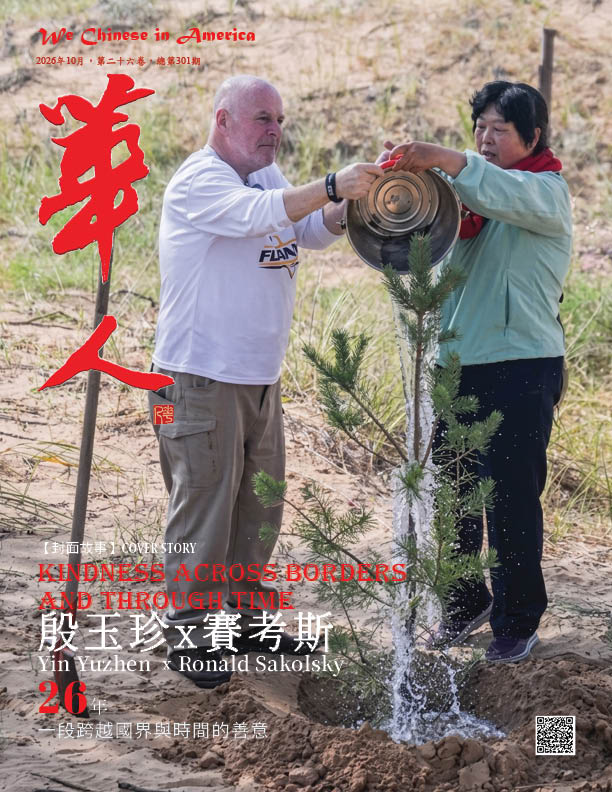
Twenty-six years ago, they planted a tree together. Today, that tree has grown into a towering tree. Twenty-six years later, they stood side by side once again and planted a new tree.
From one tree to a forest; from a single act of kindness to a friendship that has endured for 26 years—this connection continues to grow on the land.
The story of the three of us is not a dramatic tale, but a warm friendship slowly built through admiration, care, and concern. It is a friendship that has crossed borders and time.
This is a story about kindness, friendship, and human connection—a story of truth, goodness, and beauty that continues to live in our hearts.
⭐Yin Yuzhen: Planting Hope in the Desert
Yin Yuzhen was born in April 1966 in Jingbian County, Shaanxi Province. In 1985, at age 19, she married Bai Wanxiang and moved to the Mu Us Desert. They lived in an underground shelter of less than 4 square meters. Sandstorms, scarce water, and isolation made life extremely difficult. During her first years there, Yin once went more than 40 days without seeing another person.
But she refused to give in. She decided to plant trees.
“I would rather work myself to death planting trees than let the sand bury me.” — Yin Yuzhen
Although she had never received a formal education, Yin drew on what she had learned while helping in her father’s farm. She planted seedlings one by one. When desert winds uprooted them, she planted them again.
She believed, “If 10 trees can survive, then 100 can survive, and 1,000 will survive, too.”
From 1985 to 1999, Yin and her husband planted millions of trees, gradually bringing green to about 40,000 mu of barren land. Her story became widely known as an example of perseverance in combating desertification.
⭐Ronald Sakolsky: A $5,000 Donation
Ronald Sakolsky was born in 1959 in the Pittsburgh area of Pennsylvania and later became a middle school teacher. In 1999, he came to Luoyang, Henan Province, through a U.S.–China teacher exchange program.
One evening, he saw a television report about Yin and her husband planting trees in the Mu Us Desert. Their determination deeply moved him, and he began wondering how he could help.
He eventually found an American organization willing to provide support and donated $5,000 to Yin. After spending two to three months completing the necessary arrangements, he successfully sent the money to Yin Yuzhen.
Yuzhen kept a one-dollar bill as a reminder and used the rest to purchase seedlings.
A year later, Sakolsky traveled to Inner Mongolia and met Yin for the first time.
⭐Their First Meeting: Planting a Seed of Kindness and Hope
In 2000, Sakolsky traveled deep into the Mu Us Desert. The barren landscape and harsh conditions gave him a firsthand understanding of the difficulties Yin had faced.
When they met, Sakolsky ran toward Yin and gave her a typical American hug, surprising her because she had never been so physically close to a foreigner.
With little to offer her guest, Yin prepared a simple bowl of noodles.
Sakolsky watched as Yin planted trees using the most basic methods—making holes in the sand with a stick, placing in fragile seedlings and tying them with twines. .
“Impossible! They can’t survive,” Sakolsky said.
Yin confidently replied, “Possible! I’ll make the impossible possible for you.”
She also told him, “Come back in a few years and see for yourself. I will turn this place into a forest.”
When Sakolsky left, neither knew that their farewell would last 26 years.
⭐My Connection with Yin: Sharing Her Story
I first met Yin in the winter of 2018, when I brought her to the “Shining Stars” event as an international consultant for Shenmo Education. In front of more than 1,000 participants from China and around the world, she shared her story of planting trees and fighting desertification. Her presentation moved many people to tears.
In 2024, she was invited to the One Belt and One Road International Speech, Language and Hearing Conference at Beijing Language and Culture University, allowing more people to hear her story.
Over the years, Yin has received numerous honors, including National Model Worker, National Hero in Combating Desertification, the China Environment Prize, and Green China Person of the Year. She was nominated for the Nobel Peace Prize in 2005, served as a Beijing Olympic torchbearer in 2008, and received the Outstanding Contribution Award of the Jia Sixie Agricultural Award in 2024. In May 2026, she received the Together We Thrive Award from the Aurora Foundation in Sweden.
Yet beyond these honors, what matters most to me is to share her story.
I joined Shenmo Education, international mountaineer Jerry Kobalenko, and artist Cui Yazheng in creating a bilingual picture book Yin Yuzhen - The Queen of Desert which was published in 2019. Its sequel, Creating Miracles in the Desert of Yin Yuzhen, The of Desert, was published in September 2026.
Through these books, I hope to continue to introduce Yin’s story. I hope her story can reach more people, especially children who may have limited access to education.
To me, Yin is more than a woman who planted hope in the desert. She is my friend. I affectionately call her “Peach,” while she calls me “Twinkle, Twinkle, Little Star.”
⭐26 Years Later: Searching for the American Friend
After Sakolsky left China and returned to the United States in 2000, Yin Yuzhen never forgot the American friend who had helped her.
Over the next 26 years, she planted more than 50,000 seedlings purchased with his $5,000 donation. Today, the forest is known as the “Sakolsky Forest.”
Yin always hoped that one day Sakolsky would return and see how the trees they had planted had grown.
Whenever she met visitors from the United States, she would bring out their old photograph and ask:
“Do you know Sakolsky?”
On May 16, 2026, during a tree-planting event in Inner Mongolia, Yin expressed her wish:“I want to find that American friend and invite him to come back and see how tall the trees he helped plant have grown.”
A video recording of her words quickly spread online, and media outlets across China joined the efforts in search for Sakolsky.
A breakthrough soon came.
Bai Fan, the former principal of the school in Luoyang where Sakolsky once taught, saw the reports and recognized this American teacher. With his help, Yin was able to reconnect with Sakolsky.
Just 26 hours after the search video was released, the two old friends, separated by thousands of miles, saw each other again through a video call.
Looking at Sakolsky on the screen, Yin said:
“I am waiting for you in the desert.”
They eventually agreed to meet in the Mu Us Desert in August.
⭐ The Reunion After 26 Years
Before Sakolsky set out for Inner Mongolia, I spoke with both of them several times by phone and video.
I told Sakolsky:
“This reunion will be a very important moment in both of your lives.”
I also encouraged Yin to do everything she could to make sure the two old friends had the chance to meet again.
For more than half a month, Yin prepared for the reunion she had waited 26 years for. She made a lot of mooncakes, bought a new light-green coat to wear, and gathered flowers from the Mu Us Desert to weave into a garland.
On August 23, Sakolsky departed from Pittsburgh, traveling through Washington, D.C., and Beijing. After about 30 hours, he arrived in Ordos, Inner Mongolia.
Yin was already there, holding flowers and waiting for him.
When they saw each other again, tears filled Sakolsky’s eyes. Then came a long embrace.
That embrace carried the longing and emotions of 26 years—feelings that words could never fully express.
Twenty-six years earlier, Yin’s family had little to offer their distant guest. They could only serve him a simple bowl of noodles.
Twenty-six years later, she prepared the same dish for him again.
This time, however, the flour had been freshly milled, and the cutting board was newly purchased.
The same bowl of noodles, separated by 26 years, became a quiet and touching symbol of their friendship.
On September 1, the two friends said goodbye once again.
⭐ The Story Continues
Yin Yuzhen’s story did not end with this reunion.
Before leaving China on September 1, Sakolsky left Yin a handwritten message:
“Never forget that you are the main character in this story.”
But after witnessing everything that happened, I think that perhaps this time, they were both the main characters.
On September 7, Yin, Ronald, and I spoke again by video.
Yin regretted that their reunion had been brief. Through the video call, she took Sakolsky and me up to the tower in her park, where we looked out over the forest, now lush and green.
We also talked about the second sapling that Yin and Sakolsky had planted together. After Sakolsky left, it rained for several consecutive days. To Yin, the rain was a good sign, giving her confidence that the new tree, carrying the meaning of their friendship, would grow well.
“This must be a good omen,” Yin said.
And this story of friendship across borders and time is still unfolding.
From October 8 to 16, 2026, Yin Yuzhen and Sakolsky were invited to Rome, Italy, to attend World Food Week as guests. Yin will depart Beijing for Rome on the evening of October 12, while Sakolsky will also leave the United States for Rome that day. The two friends will meet again in Rome .
From a single tree in the Mu Us Desert to a story now reaching the world stage, their journey continues.
And the tree they planted 26 years ago still stands on that land, witnessing a friendship that has crossed borders and time.

親愛的讀者朋友們,
在一個因彼此差異而產生分歧的世界裡,善意是一種跨越國界都能理解的語言。一個簡單的慷慨舉動、一份尊重,或一份理解,都能跨越文化的差異,提醒我們身為人類所共同擁有的情感與價值。
中美之間的情誼,不僅建立於官方交流,也來自民間無數真誠而溫暖的人與人之間的連結。殷玉珍與賽考斯(Ronald Sakolsky)的故事正告訴我們:日常中的一份善意,就能搭起一座跨越國界的堅固橋樑,不因其他外在因素而輕易被摧毀。賽考斯捐給殷玉珍的5,000美元善款,最終化為五萬多棵充滿希望的樹苗,逐漸成為一片森林。他們的友誼感動了世界各地無數人的心。
這份友誼是讓我們學會傾聽、尊重彼此的差異,並看見那些將人與人連結在一起的故事。當我們以開放與善意彼此相待,就能將民族與民族之間的關係,提升為共同追求理解與和平的承諾。而本期「華人之友」專欄所介紹的霍華德.魯賓斯坦(Howard S. Rubenstein)醫生,也正是這樣一位傳遞善意、促進不同國家友誼的重要人物。
這些看似微小的善意,所產生的影響卻可以深遠。一個善意的舉動,可以開啟另一個善意之門;一段真摯的友誼,也能帶來更多跨文化的交流與理解。在這個比任何時候都更需要理解的世界裡,讓我們記住:友誼,往往就是從一件看似簡單、卻充滿力量的善意開始。
-------------------------------------------------------
To Our Readers
In a world often divided by differences, kindness remains a language we all understand. A simple gesture of generosity, respect, or understanding can cross cultural boundaries and remind us of what we share as human beings.
The friendship between Americans and Chinese is built not only through official exchanges and institutions, but also through countless personal connections—the story of Yin Yuzhen and Ronald Sakolsky shows us that everyday acts of kindness create bridges. His 5000.00 gift to her turned into a forest of thousands of trees. Their story has touched the hearts and souls of millions globally.
American-Chinese friendship does not require us to be the same. It asks us to listen, to respect our differences, and to recognize the human stories that connect us. When we approach one another with openness and goodwill, friendship becomes more than a relationship between two peoples; it becomes a shared commitment to understanding and peace. Dr. Howard S. Rubenstein was such an icon of goodwill and friendship.
Kindness may seem small, but its influence is far-reaching. One kind act can inspire another, and one genuine friendship can open the door to many more. In times when the world needs greater understanding, let us remember that friendship often begins with something as simple—and as powerful—as kindness.
文|劉麗容
2026年8月下旬,在內蒙古毛烏素沙地,一場闊別26年的重逢溫暖落幕。
沒有豪華餐廳,也沒有山珍海味,餐桌上是來自沙地的當季鮮蔬與家常菜餚。