




【《We Chinese in America》Media Editor Tang Zhao, August 18, 2022】former President Donald Trump has hired a prominent Atlanta lawyer to represent him in a criminal inquiry into election interference in Georgia. The lawyer, Drew Findling, has represented an array of rap stars including Cardi B, Gucci Mane and Migos, and is known by the hashtag #BillionDollarLawyer. But he is also well regarded for a range of criminal defense work that he has done in Georgia. (Drew Findling image from Getty Images)
Findling brings decades of trial experience ranging from high-profile murder cases to local political corruption scandals. But in the past, he has been openly — indeed, scathingly — critical of the former president.
Findling explained his decision to take on Trump by referring to John Adams, who took the unpopular position of representing British troops after the Boston Massacre.
“I do not believe that we choose our client or clients based on race, ethnicity, sexual orientation, gender, political belief or the substantive issues involved in the crime,” he said. “We have our personal lives and we have our personal politics, and I don’t apologize for my personal politics.”
Findling also drew upon the kinds of First Amendment issues that often arise in criminal cases at the nexus of hip-hop and crime, and maintained that Trump had done nothing improper in Georgia. He mentioned Trump’s infamous taped phone call Jan. 2, 2021, with Brad Raffensperger, the Georgia secretary of state, and specifically addressed the moment when Trump pressed Raffensperger to “find” 11,780 votes that could overturn Joe Biden’s victory in Georgia, which some legal experts say may amount to solicitation to commit election fraud under Georgia law.
“Somebody listens to a rap song that lasts for four minutes and 11 seconds and pulls one verse out and tries to conjure up some type of criminal case out of it,” said Findling, who said that in both the phone call and a rap song, context was crucial.
Findling said he was part of a Georgia-based legal team now working for Trump that also includes Jennifer Little, a former DeKalb County prosecutor, and Dwight L. Thomas, a veteran defense lawyer who previously worked with the Office for Civil Rights at the U.S. Education Department.
Findling has previously been sharply critical of a crackdown on rappers and those accused of being gang members; he represents YFN Lucci, an Atlanta rap artist who was indicted on murder and racketeering charges in Fulton County last year.
Findling also has extensive experience with political clients. In 2013, he helped win the acquittal of Victor Hill, the sheriff of Clayton County, Georgia, who had been indicted on a host of corruption-related charges after an investigation by a special grand jury. Hill also retained Findling after he was federally indicted last year on numerous civil rights charges for the alleged mistreatment of detainees at the local jail. He has been suspended from his position pending a trial set for October.
Findling also recently represented Mitzi Bickers, who once worked in the administration of the former mayor of Atlanta, Kasim Reed, a Democrat. Bickers was convicted in March on nine federal corruption counts as part of a multimillion-dollar contracting and kickback scandal.
And he is representing John Oxendine, the former insurance commissioner of Georgia, a Republican who was indicted in May on federal charges of conspiracy to commit health care fraud and conspiracy to commit money laundering.
Esther Panitch, a veteran Atlanta-area criminal defense lawyer and Democratic nominee for a state House seat, has known Findling for years. She called him “brilliant.”
“That being said, he needs a client who will listen to him,” she said.
(Source: yahoo/news)
This website has a free subscription function, please enter your email address and name (any nickname) in the upper right corner of the page. After subscribing, you can receive timely updates of the website. I hope that new and old readers will actively subscribe, so that we have the opportunity to provide you with better services
Please click: Home (wechineseus.com) for more news and content on this website
Follow The Chinese Media's Twitter account: https://twitter.com/wechineseinus
Follow The Chinese Media's Facebook account: https://www.facebook.com/wechineseinamerica/

《We Chinese in America》Media Editor Tang Zhao, August17, 2022】It may be hard to believe, but California's esteemed university system was tuition-free for state residents until 1970. Now, the average charge in the UC system is more than $13,000 a year, and fees, housing, meals and other costs add an estimated $25,000 to that total. (Image Credit: Depositphoto)
The increase in costs is due in part to the declining percentage of the UC budget that the state covered. Lately, however, state officials have tried to make higher education affordable again for more Californians, pumping larger amounts into the UC and Cal State University budgets and making community college tuition-free for low-income residents.
And now the state is launching CalKIDS, a taxpayer-funded scholarship program aimed at helping kids start saving for college from the day they're born. The program grants up to $100 automatically to every child born in California on or after July 1 and up to $1,500 automatically to every eligible low-income student.
The tax-free money is invested in a mutual fund managed by ScholarShare, the state's college savings plan, and can be spent on tuition, books and other education-related expenses. Withdrawals for other purposes would be subject to taxes.
The point, state officials say, is to encourage more kids to continue their studies after high school.
"Research demonstrates that children with a college savings account are three times more likely to enroll in college and nearly four times more likely to graduate than children with no savings," the CalKIDS program information guide states. "The investments provided in a CalKIDS account can be a steppingstone to building a new savings behavior for families and serve as a tangible demonstration of the state's commitment to supporting children in reaching the goal of higher education."
Just to be clear, CalKIDS says it is a scholarship program, and unlike 529 savings plans that help parents and students to set aside money for college, you can't add money to your child's CalKIDS account. For that, you'll need a 529.
Who is eligible? How does it work?
The program follows the model for child development accounts laid out by the Center for Social Development at Washington University in St. Louis, which calls for universal eligibility for newborns in the state. So if you live in California and have a baby on or after July 1, the program will automatically start a CalKIDS account for your child with a $25 grant. There is no citizenship requirement.
You'll need to register online with CalKIDS to gain access to the account, but doing so comes with its own incentive: an additional $25 grant, bringing your child's total to $50. You can do that at the CalKIDS site; you'll need to provide the local registration number from your child's birth certificate or the unique code that CalKIDS will send to all new parents, along with your child's date and county of birth.
And if you set up a 529 savings plan at ScholarShare and link it to your child's CalKIDS account, CalKIDS will deposit an additional $50, bringing your child's total to $100. You can link accounts through the CalKIDS site.
What about older kids?
Starting in September, low-income children entering the first grade in California public schools will automatically receive a CalKIDS account with $500. Kids living with foster parents will receive an additional $500; those identified as homeless will also receive an additional $500.
Similarly, public-school students who were in grades 1 through 12 last year will be automatically enrolled, with the same grants available.
Do you have to do anything?
To maximize participation, CalKIDS is collecting information from the California Department of Public Health on babies born in the state and from the California Department of Education on students who meet the eligibility criteria. So the program can set up accounts without any input from parents.
Be forewarned — there's a bit of a delay. According to CalKIDS, it will take up to six months after a baby's birth for the account to be created. And while students' eligibility will be determined in October, their accounts won't be established until the following spring or summer.
And remember, to access an account, you or your child will have to register at the CalKIDS site.
If for some reason you don't want the scholarship, you'll need to mail an opt-out form to the program. You can find versions in English and in Spanish on the CalKIDS site.
What happens to the money?
According to the program, the CalKIDS scholarship grants are invested in what's known as a target-date mutual fund, which is a mixture of more and less risky holdings. Specifically, it will go into the relevant ScholarShare 529 Plan Passive Enrollment Year Portfolio.
The closer your child gets to graduating high school, the more the investments shift into less risky assets. That way, the account is less likely to drop sharply in value if the stock market tanks just as you're starting to make withdrawals.
What can the money be spent on?
That's governed by federal law. Qualified expenses include tuition and fees at colleges, trade schools and other educational institutions whose "primary function is the presentation of formal instruction," along with "books, supplies, and equipment required for courses of instruction at such an educational organization."
Under federal tax law, if scholarship money is used for expenses that aren't qualified, that amount must be reported as regular, taxable income.
(Source: The Press Domocat)
This website has a free subscription function, please enter your email address and name (any nickname) in the upper right corner of the page. After subscribing, you can receive timely updates of the website. I hope that new and old readers will actively subscribe, so that we have the opportunity to provide you with better services
Please click: Home (wechineseus.com) for more news and content on this website
Follow The Chinese Media's Twitter account: https://twitter.com/wechineseinus
Follow The Chinese Media's Facebook account: https://www.facebook.com/wechineseinamerica/
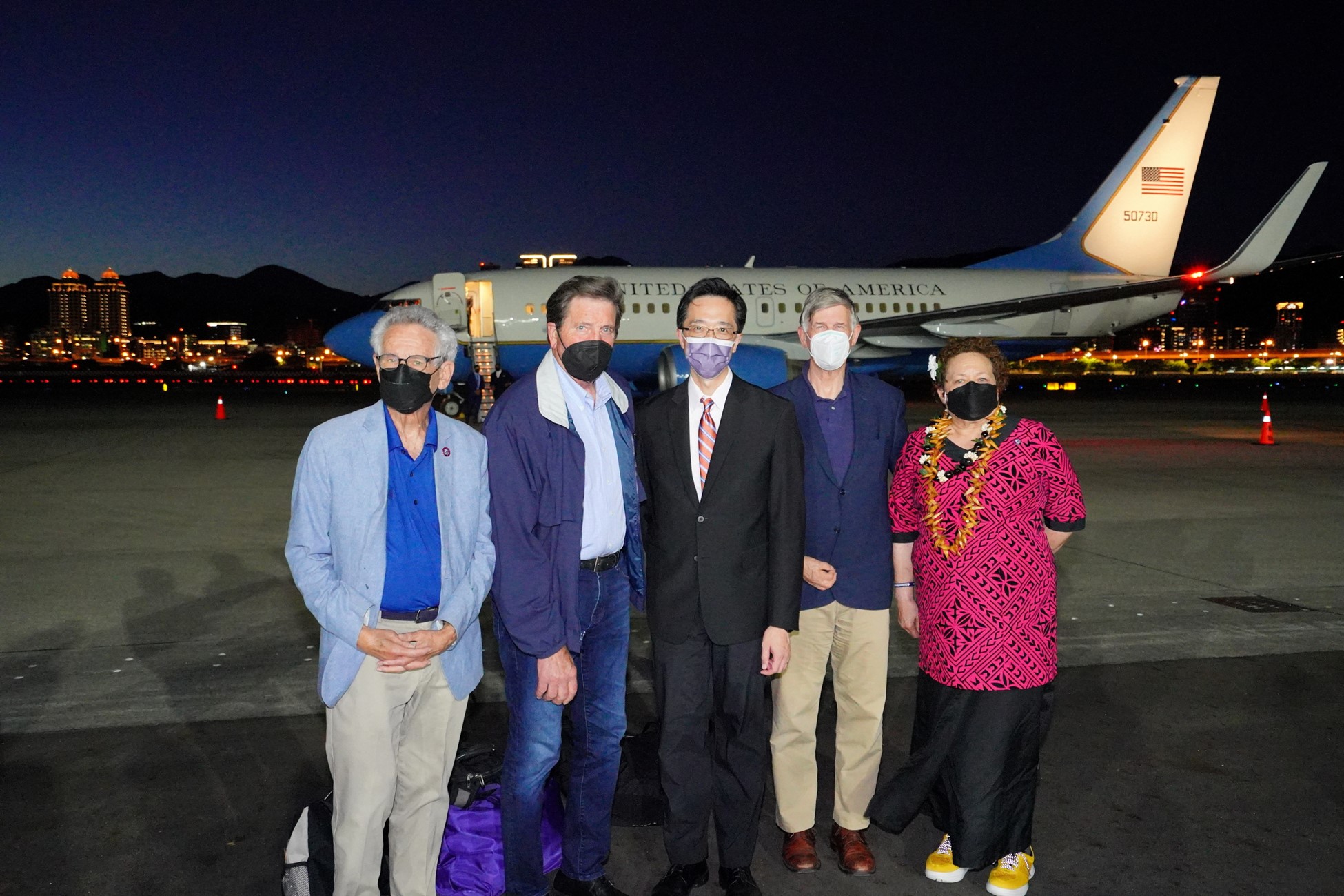
【《We Chinese in America》Media Editor Tang Zhao, August 15, 2022】China responded to Pelosi’s Aug. 2 visit by sending missiles, warships and warplanes into the seas and skies around Taiwan for several days afterward. The Chinese government objects to Taiwan having any official contact with foreign governments, particularly with a high-ranking congressional leader like Pelosi.(Photo image credit: Reuters)
Just 12 days after Pelosi’s visit, a delegation of American lawmakers arrived in Taiwan on Sunday. The five-member delegation, led by Democratic Sen. Ed Markey of Massachusetts, will meet President Tsai Ing-wen and other officials, as well as members of the private sector, to discuss shared interests including reducing tensions in the Taiwan Strait and investments in semiconductors.
A Taiwanese broadcaster showed video of a U.S. government plane landing about 7 p.m. Sunday at Songshan Airport in Taipei, the Taiwanese capital. Four members of the delegation were on the plane.
Markey met with South Korean President Yoon Suk Yeol earlier Sunday in South Korea before arriving in Taiwan on a separate flight at Taoyuan International Airport, which also serves Taipei. Markey, who chairs the Senate Foreign Relations East Asia, Pacific, and International Cybersecurity Subcommittee, and members of the delegation will reaffirm the United States’ support for Taiwan.
The other members of the delegation are Republican Rep. Aumua Amata Coleman Radewagen, a delegate from American Samoa, and Democratic House members John Garamendi and Alan Lowenthal from California and Don Beyer from Virginia.
A senior White House official on Asia policy said late last week that China had used Pelosi’s visit as a pretext to launch an intensified pressure campaign against Taiwan, jeopardizing peace and stability across the Taiwan Strait and in the broader region.
China’s ruling Communist Party has long said that it favors Taiwan joining China peacefully but that it will not rule out force if necessary.
Campbell, speaking on Friday, said the U.S. is developing a roadmap for trade talks with Taiwan that he said the U.S. intends to announce in the coming days.
(Source: AP)
This website has a free subscription function, please enter your email address and name (any nickname) in the upper right corner of the page. After subscribing, you can receive timely updates of the website. I hope that new and old readers will actively subscribe, so that we have the opportunity to provide you with better services
Please click: Home (wechineseus.com) for more news and content on this website


【《We Chinese in America》Media Editor Tang Zhao, August 16, 2022】As an ongoing effort to enhance our valuable service to We Chinese in America website readers, We Chinese in America website posts English and Chinese versions of “IRS News Release” , “IRS Fact Sheets”, and “tax tips” directly received from IRS Media Relations Office in Washington, D.C.. We are pleased to take on this important role partnering with IRS to better inform the public.
IRS announces interest rate increases for the fourth quarter of 2022; 6% rate applies to most taxpayers starting Oct. 1
IR-2022-150, Aug. 15, 2022
WASHINGTON — The Internal Revenue Service today announced that interest rates will increase for the calendar quarter beginning Oct. 1, 2022.
For individuals, the rate for overpayments and underpayments will be 6% per year, compounded daily, up from 5% for the quarter that began on July 1. Here is a complete list of the new rates:
- 6% for overpayments [3.5% for corporations]. (payments made in excess of the amount owed)
- 3.5% for the portion of a corporate overpayment exceeding $10,000.
- 6% for underpayments. (taxes owed but not fully paid)
- 8% for large corporate underpayments.
Under the Internal Revenue Code, the rate of interest is determined on a quarterly basis. For taxpayers other than corporations, the overpayment and underpayment rate is the federal short-term rate plus 3 percentage points.
Generally, for a corporation, the underpayment rate is the federal short-term rate plus 3 percentage points, and the overpayment rate is the federal short-term rate plus 2 percentage points. The rate for large corporate underpayments is the federal short-term rate plus 5 percentage points. The rate on the portion of a corporate overpayment of tax exceeding $10,000 for a taxable period is the federal short-term rate plus one-half (0.5) of a percentage point.
The interest rates announced today are computed from the federal short-term rate determined during July 2022. See the revenue ruling for details.
Revenue Ruling 2022-15 announcing the rates of interest, is attached and will appear in Internal Revenue Bulletin 2022-35, dated Aug. 29, 2022.
Source: IRS News Release
Internal Resource Service
Media Relation Office
Washington, D. C
Media Contact: 202 317 4000
Public Contact: 800 829 1040
This website has a free subscription function, please enter your email address and name (any nickname) in the upper right corner of the page. After subscribing, you can receive timely updates of the website. I hope that new and old readers will actively subscribe, so that we have the opportunity to provide you with better services
Please click: Home (wechineseus.com) for more news and content on this website
Follow The Chinese Media's Twitter account: https://twitter.com/wechineseinus
Follow The Chinese Media's Facebook account: https://www.facebook.com/wechineseinamerica/
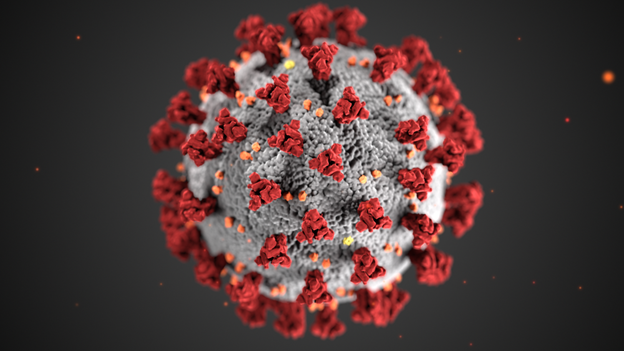
【《We Chinese in America》Media Editor Tang Zhao, August 14, 2022】The Centers for Disease Control and Prevention updated its Covid-19 guidance on Thursday because, the agency says, the virus presents a lower risk of severe disease, hospitalization, and death than it did at the start of 2020. (COVID Image from CDC)
Greta Massetti, a CDC epidemiologist said, in a statement, “This guidance acknowledges that the pandemic is not over, but also helps us move to a point where COVID-19 no longer severely disrupts our daily lives”.
If you’re not up-to-date with your vaccines and have been exposed to Covid, you no longer need to quarantine. Instead, it’s recommended that you mask for 10 days and get tested on Day Five.
Assuming you do test positive for Covid, here are the CDC’s updated guidelines:
- If you’ve tested positive and have a healthy immune system, regardless of vaccination status, you should isolate for five days. Isolation can be ended at Day Six if you no longer have symptoms or have not had a fever for 24 hours and your symptoms have improved.
- Once isolation has ended, the agency recommends you wear a high-quality maskthrough Day 10. If you test negative on two rapid antigen tests, though, you can stop wearing your mask sooner.
- Until Day 11 at least, you should refrain from visiting or being around people who are more likely to have severe outcomes from Covid, including the elderly and people with weakened immune systems.
Those with weakened immune systems or people who were hospitalized before with Covid are encouraged to isolate for 10 days and consult with their doctor before ending isolation. Likewise if you are experiencing shortness of breath due to the virus, you’re recommended to isolate for 10 days.
This means students can now stay in the classroom this fall even if they’ve been exposed to Covid, the CDC said on Wednesday. It’s still recommended that students and school staff mask for 10 days and test on Day Five in the case of an exposure.
The push for this decision may come from a new statistic: 95% of the U.S. population has some level of immunity against Covid, according to Massetti.
“High levels of population immunity due to vaccination and previous infection and the many available tools to protect the general population and protect people at higher risk allow us to focus on protecting people from serious illness from Covid,” she said during a call with reporters on Thursday.
(Source: CNBCmakeit)
This website has a free subscription function, please enter your email address and name (any nickname) in the upper right corner of the page. After subscribing, you can receive timely updates of the website. I hope that new and old readers will actively subscribe, so that we have the opportunity to provide you with better services
Please click: Home (wechineseus.com) for more news and content on this website
Follow The Chinese Media's Twitter account: https://twitter.com/wechineseinus
Follow The Chinese Media's Facebook account: https://www.facebook.com/wechineseinamerica/