




【《We Chinese in America》Media Editor Tang Zhao, August27, 2022】Two pilots on an Ethiopian Airlines flight reportedly fell asleep and missed their landing, according to the commercial aviation news site Aviation Herald.(Photo Credit: Flight to Success)
The Boeing 737-80 was en route to Ethiopia from Sudan on Monday when the pilots dozed off, causing the aircraft to fly past the runway at Addis Ababa Bole International Airport.
Air traffic control tried to contact the crew multiple times but could not reach anyone, Aviation Herald reported. Eventually, an alarm sounded in the plane waking the sleeping pilots, according to the news site.
The pilots safely landed the plane about 25 minutes later.
Ethiopian Airlines, Africa's largest airline, did not confirm that the pilots fell asleep but said it received a report about a flight temporarily losing communication with air traffic control.
"The flight later landed safely after communication was restored," the airline said in a statement.
The involved crew was "removed from operation" pending an investigation, the statement continued.
"Appropriate corrective action will be taken based on the outcome of the investigation. Safety has always been and will continue to be our first priority," the airline said.
Aviation analyst Alex Macheras said the incident was "deeply concerning." He said in a tweet Thursday that it once again sounds the alarm on pilot fatigue, an issue many U.S. pilots have raised.
In June, more than 1,300 Southwest Airlines pilots stood on a picket line in Dallas, Texas, to demand better work conditions. In a statement to NBC News at the time, the union said that they had been in contract negotiations for more than two years while noting that "pilot fatigue rates have reached an all-time high."
One pilot. Capt. Casey A. Murray, who is also the president of the Southwest Airlines Pilots Association, said that pilots have been "under a lot of stress for the past year," noting that frequent flight reassignments have left pilots feeling fatigued and frustrated.
"Pilot fatigue is nothing new," Macheras tweeted, adding that it "continues to pose one of the most significant threats to air safety — internationally."
(Source: NBC News)
This website has a free subscription function, please enter your email address and name (any nickname) in the upper right corner of the page. After subscribing, you can receive timely updates of the website. I hope that new and old readers will actively subscribe, so that we have the opportunity to provide you with better services
Please click: Home (wechineseus.com) for more news and content on this website
Follow The Chinese Media's Twitter account: https://twitter.com/wechineseinus
Follow The Chinese Media's Facebook account: https://www.facebook.com/wechineseinamerica/
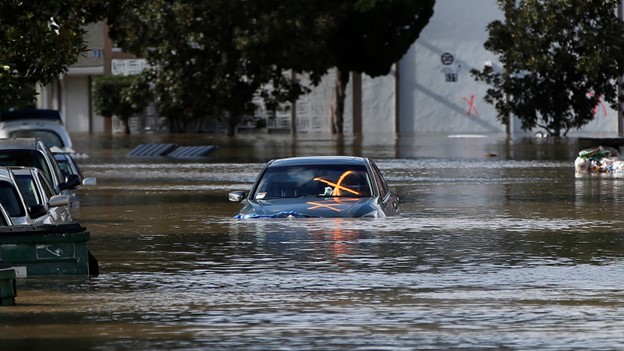
【《We Chinese in America》Media Editor Tang Zhao, August 26, 2022】As California struggles with severe drought, global warming has doubled the likelihood that weather conditions will unleash a devastating deluge capable of displacing up to 10 million people in a $1-trillion disaster larger than any in world history. (Photo Credit: Grist.com)
California has been struck by giant atmospheric-river-fueled storms before. A particularly devastating one in 1861-62 transformed the Central Valley into an inland sea, and Sacramento was flooded so severely that Gov. Leland Stanford had to take a rowboat to his inaugural events in January 1862, according to the Sacramento History Museum. The State Legislature also temporarily moved to San Francisco.
The state has since dammed up its rivers and built bypasses to whisk floodwaters away from population centers. If that 19th-century storm hit today, all of this infrastructure would make it less likely to cause destruction. Still, the state is also far more developed — with bigger cities, more valuable farms and businesses, and many more people — which means the consequences could still be great.
In Lathrop, near Stockton, the River Islands planned community sits in an area on the San Joaquin River that flooded terribly during a 1997 storm. The developer built extra-wide levees, without using government funds, to protect the charming homes and tidy streets.
Many home buyers were from the Bay Area and asked tough questions about schools and life in the Central Valley. Yet, they never ask questions about flooding as they don’t even realize there’s a risk.
New research by climate scientists has found that the risk of a monthlong superstorm, one that would pummel both Northern and Southern California with rain and snow in astounding quantities, is rising rapidly because of human-caused global warming. The chances each year of one occurring are already around one in 50, the study estimates. And the likelihood keeps growing the more we pump greenhouse gases into the atmosphere.
Warmer air holds more moisture, which means atmospheric rivers — the storms that sweep in from the Pacific and are sometimes called “Pineapple Express” events — can carry bigger payloads of precipitation.
California is also working to strengthen levees in urban areas of the Sacramento and San Joaquin Valleys to provide protection against 200-year storms, or those with a 0.5 percent chance of occurring in any year.
(Source: New York Times)
This website has a free subscription function, please enter your email address and name (any nickname) in the upper right corner of the page. After subscribing, you can receive timely updates of the website. I hope that new and old readers will actively subscribe, so that we have the opportunity to provide you with better services
Please click: Home (wechineseus.com) for more news and content on this website
Follow The Chinese Media's Twitter account: https://twitter.com/wechineseinus
Follow The Chinese Media's Facebook account: https://www.facebook.com/wechineseinamerica/

【《We Chinese in America》Media Editor Tang Zhao, August 24, 2022】Per County of San Diego Communications Office, The California Department of Food and Agriculture (CDFA) declared a 77-square-mile quarantine covering Valley Center and surrounding areas on August 19 after discovering several Mexican fruit flies (MXFF), an agricultural pest that can infect more than 50 types of fruit, including citrus, avocados, and a wide variety of tropical fruit. (Photo credit: County of San Diego Communications Office)
CDFA officials said anyone growing or packing “host” fruit inside the quarantine area — commercially or in private yards — are urged not to move fruit off their properties. Local residents and home gardeners affected by the quarantine should consume homegrown produce on-site, to include canning, freezing or juicing and should not move host items from their property. Residents with questions are encouraged to call the consumer hotline at (800) 491-1899.
Fruit on the host list include all types of tropical citrus, but also includes certain varieties of avocados, guava, pomegranate, and many exotic fruits that are grown in the area.
As of Aug. 19, 2022, the quarantine area is bordered on the north by Pauma Valley; on the south by Lake Wohlford; on the west by the Moosa Canyon; and on the east by Rincon Reservation.
As the lead agency for a quarantine in California, CDFA is the designated point of contact for quarantine inquiries. CDFA will also conduct informational meetings with commercial growers, nurseries, packinghouses and residents inside the quarantine area.
The County Department of Agriculture, Weights and Measures (AWM) supports CDFA during a quarantine to help prevent the spread of the detected pest and any expansion of the quarantine area. AWM has alerted area agriculture stakeholders of the findings, including the San Diego County Farm Bureau, and as the host County, will assist CDFA with outreach and facilitation of grower meetings. The County will also work with growers adjacent to the quarantine area to help lessen the impact of a potential quarantine expansion and is responsible for regulating all pesticide use.
Mexican fruit flies, which are larger than a house fly, can wreak expensive agricultural destruction. Countywide, the 2020 crop value of MXFF hosts in San Diego County is $306 million. Within the quarantine boundaries, that value is $49M of San Diego County’s $1.8 billion total agricultural value.
Female flies inject their eggs inside ripening fruit. Hatched larvae then eat the fruit’s flesh, causing it to rot and drop to the ground. Larvae crawl out of the rotting fruit and into the ground to pupate. Adult flies emerge from the ground in 12 to 100-days, depending on temperatures. A single female fly can lay several thousand eggs in their lifetime.
(Source: County of San Diego Communications Office)
This website has a free subscription function, please enter your email address and name (any nickname) in the upper right corner of the page. After subscribing, you can receive timely updates of the website. I hope that new and old readers will actively subscribe, so that we have the opportunity to provide you with better services
Please click: Home (wechineseus.com) for more news and content on this website
Follow The Chinese Media's Twitter account: https://twitter.com/wechineseinus
Follow The Chinese Media's Facebook account: https://www.facebook.com/wechineseinamerica/
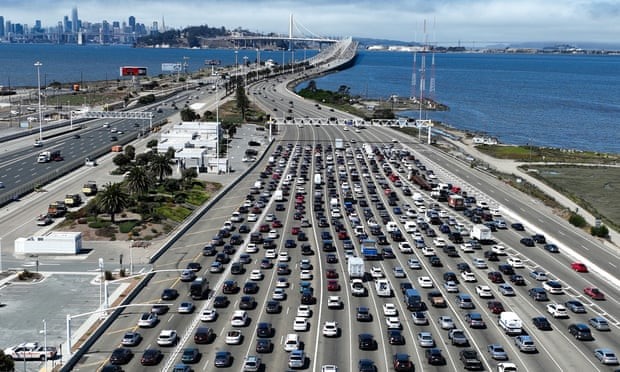
【《We Chinese in America》Media Editor Tang Zhao, August 25, 2022】California is expected to ban the sale of new gasoline vehicles by 2035 as the state takes dramatic steps to reduce emissions and combat the climate emergency.
In a vote on Thursday, state regulators are expected to approve a plan to phase out the sale of gas-powered cars over the next 13 years in America’s largest auto market. The move is being hailed as a major victory that could point the way forward for others.
The restrictions are important because not only is California the largest auto market in the United States, but more than a dozen other states typically follow California’s lead when setting their own auto emissions standards.
“This is monumental,” said Daniel Sperling, a member of the California Air Resources Board (Carb), to CNN. “This is the most important thing that Carb has done in the last 30 years. It’s important not just for California, but it’s important for the country and the world.”
The vote comes two years after the state’s governor, Gavin Newsom, issued an executive order requiring the sale of new cars to be zero-emission.
In 2021, only 12% of new cars sold in California were zero-emission, according to Carb. The new rule would require the state reach 35% of sales by 2026, 68% by 2030 and 100% by 2035. It would not affect cars that are already on the road.
The measure, which Sperling said he was almost certain would pass, will be among the first of its kind and set an example to other states that often look to California when setting their own standards. Sperling told CNN the proposal faced “surprisingly little debate” and resistance from car makers, which have ramped up production of electric vehicles. General Motors has said it plans to sell only electric vehicles by 2035.
More than half of California’s carbon pollution comes from the transportation sector, Newsom pointed out when announcing his executive order in 2020. The governor has hailed the plan as a crucial step to address the climate emergency, which has fueled costly and destructive natural disasters in the state.
“This is the most impactful step our state can take to fight climate change,” Newsom said at the time. “Californians shouldn’t have to worry if our cars are giving our kids asthma. Our cars shouldn’t make wildfires worse – and create more days filled with smoky air. Cars shouldn’t melt glaciers or raise sea levels threatening our cherished beaches and coastlines.”
Research has shown a transition to electric cars would have substantial effects in the US, where transportation is the largest contributor to the country’s greenhouse gas emissions. A report released earlier this year by the American Lung Association found the US could save 110,000 American lives, $1.2tn in public health costs and reduce greenhouses gases by 92% by 2050 if it were to swap gas-powered vehicles for zero-emissions cars.
(Source : the guradian.com)
This website has a free subscription function, please enter your email address and name (any nickname) in the upper right corner of the page. After subscribing, you can receive timely updates of the website. I hope that new and old readers will actively subscribe, so that we have the opportunity to provide you with better services
Please click: Home (wechineseus.com) for more news and content on this website
Follow The Chinese Media's Twitter account: https://twitter.com/wechineseinus
Follow The Chinese Media's Facebook account: https://www.facebook.com/wechineseinamerica/

【《We Chinese in America》Media Editor Tang Zhao, August 23, 2022】County of San Diego Communications Office, the Registrar of Voters has mailed over 1.9 million postcards to registered voters in San Diego County listing voting options for the Nov. 8, 2022, Statewide General Election. (Photo Credit: County of San Diego Communications Office)
Every active registered voter will automatically receive a ballot in the mail and will have three options for returning that ballot: by mail, to one of the Registrar’s secure ballot drop box locations, or at any vote center. Ballots begin going out in the mail on Oct. 8, giving voters nearly a month to mark their ballot and return it before Election Day.
Voters also have the choice to vote in-person at any one of over 200 vote centers located across the county, which will be open over multiple days. Elections are no longer a one-day event, and there is no need to wait until Election Day to vote.
The Registrar’s office anticipates opening 132 ballot drop box locations starting Oct. 10. Over 200 vote centers will open for four days starting Nov. 5. Nearly 40 of those vote centers will open earlier, Oct. 29, giving voters 11 days to cast their ballots in-person.
A list of ballot drop box and vote center locations will be available by Sept. 9 at sdvote.com.
What do you need to do?
Be vote ready!
- Check your voter registration information.Make sure your residence address is up to date, and if you have a separate mailing address, check that too. If accurate, no further action is needed. If different, you need to fill out a new voter registration.
- Have you recently moved or changed your name? Whether you’re new to San Diego County or just moved down the street, you need to re-register to vote. You can do this by completing a new registration online at sdvote.com.
- Not registered? Register to vote– it takes less than two minutes.
Learn more about voting in the general election at sdvote.com, call (858) 565-5800 or toll free at (800) 696-0136.
(Source: County of San Diego Communications Office)
This website has a free subscription function, please enter your email address and name (any nickname) in the upper right corner of the page. After subscribing, you can receive timely updates of the website. I hope that new and old readers will actively subscribe, so that we have the opportunity to provide you with better services
Please click: Home (wechineseus.com) for more news and content on this website
Follow The Chinese Media's Twitter account: https://twitter.com/wechineseinus
Follow The Chinese Media's Facebook account: https://www.facebook.com/wechineseinamerica/